Visiting a Church for the First Time: What to Expect
By Dom · · 7 min read
Almost everyone who has walked into an unfamiliar church has had the same three worries in the car park: that they will be the only new person, that they will be asked to do something in front of everyone, and that they will stand up at the wrong moment. The first is rarely true, the second essentially never happens, and the third does not matter to anyone but you.
Key takeaways
- Nobody will make you introduce yourself. Being singled out is the most common fear and the rarest occurrence.
- Arrive five minutes early and sit two-thirds back, near an aisle. You can see what everyone else does.
- You can stay seated for anything. Standing, singing and communion are all optional for a visitor.
- Services run 60 to 90 minutes and follow a predictable shape once you know what it is.
What actually happens
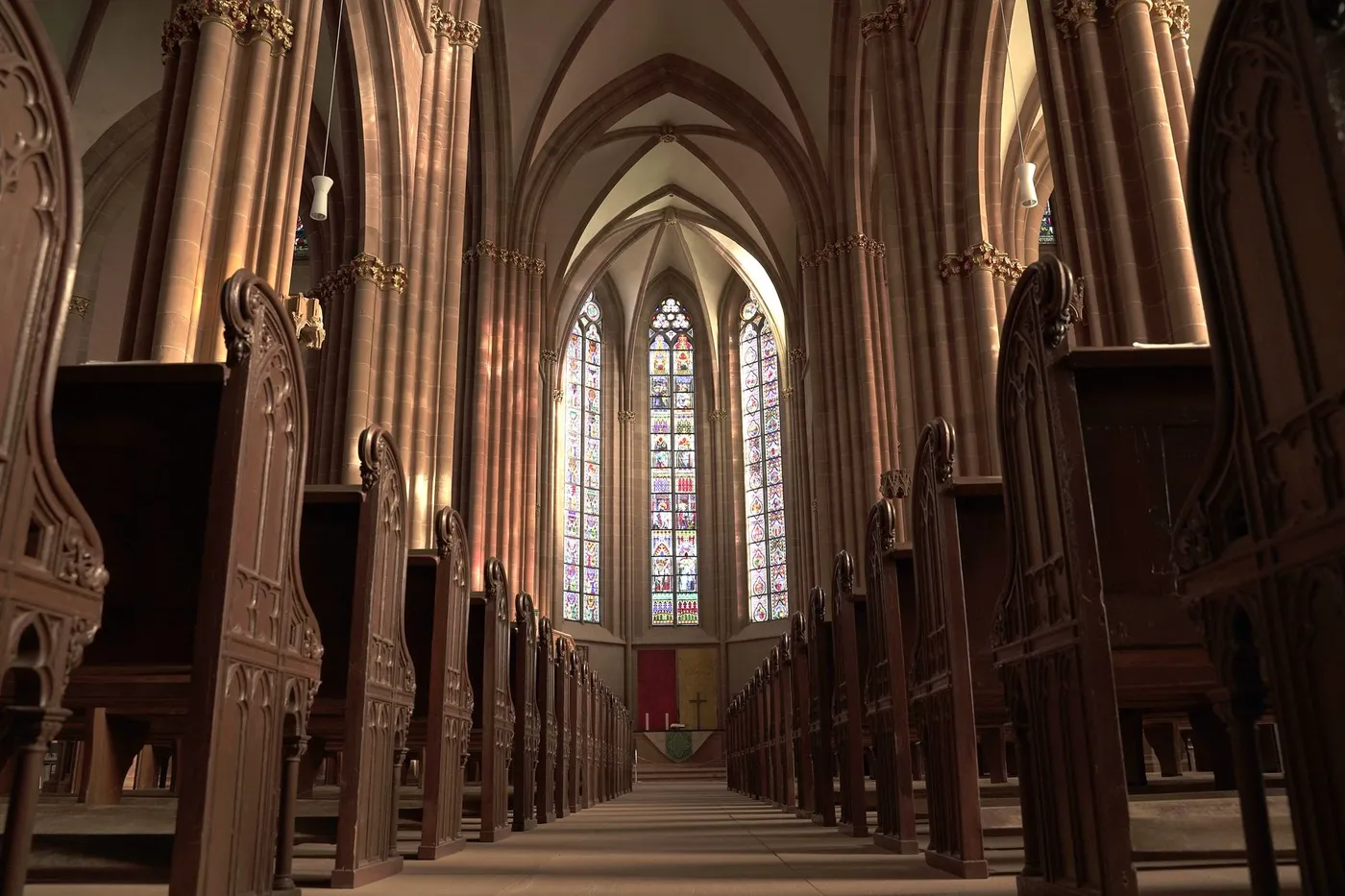
Some Sundays are easier to walk into than others, because the service explains itself from the front. Reformation Sunday in a Lutheran church is one of them.
Most Christian services follow one of a few recognisable patterns. The words differ, and the atmosphere differs a lot, but the underlying shape is stable enough that knowing it removes most of the anxiety.
| Tradition | Usual shape | Length | Worth knowing |
|---|---|---|---|
| Catholic | Mass: readings, homily, Eucharist | About 60 min | Communion is for Catholics; staying seated is normal and unremarked |
| Orthodox | Divine Liturgy, largely sung | 90 min or more | People stand for much of it and may arrive throughout |
| Mainline Protestant | Hymns, readings, sermon, prayers | About 60 min | Order of service is usually printed and easy to follow |
| Evangelical or non-denominational | Music set, then a longer sermon | 75 to 90 min | Lights may be low; nobody is watching you |
If you do not know which of these you are walking into, the church's website usually says, and the difference between traditions runs deeper than style. It reaches all the way to which books are in the Bible they read from.
What to wear
In most of the United States, whatever you would wear to a casual lunch. Jeans are unremarkable in the large majority of Protestant and non-denominational churches.
Two adjustments are worth making. Older congregations, historic downtown churches, and many Orthodox parishes tend to dress more formally, so a collared shirt or a dress is a safer read. And if you genuinely cannot tell, aim one notch smarter than you think is needed. Being slightly overdressed is invisible; being the only person in shorts is not.
Nobody will say anything either way. This worry is almost entirely internal.
The practical mechanics
- Arrive about five minutes early. Early enough to sit without an audience, late enough to avoid a long conversation before you are ready for one.
- Sit two-thirds of the way back, near an aisle. You can see what the room does before you have to do it, and you can leave easily if you need to.
- Take whatever is handed to you. A bulletin or order of service is a map of the next hour.
- When the offering passes, pass it on. Visitors are not expected to give, and no one tracks it.
- Stay seated for anything you are unsure about. This is genuinely fine and far less conspicuous than you imagine.
On communion specifically: practice varies and the difference matters. Catholic and Orthodox churches reserve it for members of their own communion. Many Protestant churches invite any baptised Christian. Most will state their practice out loud before it happens. If they do not, staying seated is always an acceptable choice.
The bit people actually dread
Being asked to stand up and introduce yourself. It is worth saying plainly: this is rare, and it is getting rarer, because churches have worked out that it makes visitors less likely to return.
Some churches ask everyone to greet the people around them for thirty seconds. That is not about you and it ends quickly. A handshake and your first name is a complete performance.
If you would rather have none of it, sitting near an aisle two-thirds back and leaving during the final song is entirely normal and nobody will think anything of it.
A Sunday is one hour of a week that has a hundred and sixty-seven others in it. The rhythm that actually changes things is the daily one, and it is the harder one to start. BlessUp shields your most distracting apps until you have read the day's chapter, so the habit does not depend on remembering. BlessUp is on the App Store
Newcomer anxiety is well documented. Lifeway Research has found that whether a visitor returns depends far more on whether anyone spoke to them than on the service itself, and Barna reports similar patterns in how people describe their first visits.
Going back is the real decision
A single visit tells you very little. First visits are dominated by architecture, music and whether the coffee was any good, none of which will matter in a year.
The things that matter show up on the second and third visits. Did anyone remember you. Is there a way in beyond the service. Does the teaching consistently work from the text rather than around it. A structured way to run that search helps if you have several churches to compare, especially after a move.
To find services near you, the BlessUp church finder maps Christian churches across 54 US cities with directions on every listing, including Chicago, Houston, Atlanta and Seattle.
Sunday is one hour. If the daily habit went quiet at the same time, a beginner's reading plan is the smaller of the two restarts, and it does not require making up for lost time.
If it has been a long time
A feast day can be an easier first Sunday than an ordinary one, because the service has a clear shape and nobody is looking around. All Saints’ Day on November 1 is one of the gentlest of them.
Returning after years away carries a different weight than visiting somewhere new. People expect to be asked where they have been, and brace for a conversation that, in practice, almost never comes.
Nobody is keeping a register. The room does not know how long it has been, and would mostly be glad rather than curious. Matthew 11:28 is an invitation to people who are tired, not a summons to people with a good attendance record.
You are allowed to sit at the back, say nothing to anyone, and leave. That counts as going.
Frequently asked questions
What should I wear to church for the first time?
In most American churches, what you would wear to a casual lunch. Jeans are unremarkable in the majority of Protestant and non-denominational congregations. Historic downtown churches, older congregations and many Orthodox parishes dress more formally, so a collared shirt or a dress is a safer choice if you cannot tell.
Will I have to introduce myself in front of everyone?
Almost certainly not. Being asked to stand and introduce yourself is rare and becoming rarer, because churches have found it makes visitors less likely to return. Some services include a thirty-second greeting where everyone turns to the people nearby, and a handshake with your first name is a complete response.
How long does a church service last?
Most run between 60 and 90 minutes. A Catholic Mass is usually about an hour. Mainline Protestant services run about an hour. Evangelical and non-denominational services with a music set and a longer sermon often run 75 to 90 minutes. An Orthodox Divine Liturgy commonly runs 90 minutes or more.
Can I take communion as a visitor?
It depends on the church, and most state their practice out loud beforehand. Catholic and Orthodox churches reserve communion for members of their own communion. Many Protestant churches invite any baptised Christian. If you are unsure, staying seated is always acceptable and is not treated as unusual.
What if I have not been to church in years?
Nobody is keeping a register, and the room has no idea how long it has been. The conversation people brace for, being asked where they have been, almost never happens. Sitting near the back, saying nothing to anyone, and leaving after the final song all count as going.
Read a chapter. Your apps open. BlessUp is free to download on the App Store.
No guilt. Ever. Grace is built in. Funded by readers, never by ads.