How to Find a Church in a New City
By Dom · · 8 min read
Moving breaks a lot of small habits quietly, and church is usually one of the first to go. Not by decision. You mean to find somewhere, the first Sunday is spent unpacking, the second you are exhausted, and by the sixth the whole thing has become a slightly awkward project you keep postponing. Two years later people describe themselves as having drifted, when what actually happened was a house move and no plan.
Key takeaways
- Decide what you are looking for before you visit anywhere. Shortlisting without criteria turns into endless sampling.
- Visit three or four churches in a month, not one a month for four months. Momentum matters more than thoroughness.
- Go on an ordinary Sunday. A Christmas or Easter service tells you almost nothing about a normal week.
- Give a church three visits before deciding. First visits are about the building; third visits are about the people.
Start with what you are actually looking for
The most common mistake is visiting churches before deciding what would make one right. You end up comparing music and parking, because those are the things you notice first, and six weeks later you are no closer.
Spend ten minutes writing down two lists: what you genuinely valued about your last church, and what you quietly wished were different. The second list is the more useful one. It is usually where the real criteria hide.
Then sort what you wrote into three buckets, because they do not carry equal weight.
- Non-negotiable. Usually doctrine and tradition. If you are Catholic, you need a parish. If you hold a particular theological position, that narrows the field fast and it should.
- Strongly preferred. Distance, service times, whether there is anything for your kids, whether people your age are there.
- Nice to have. Music style, building, coffee. Real preferences, but poor reasons to rule a church out on one visit.
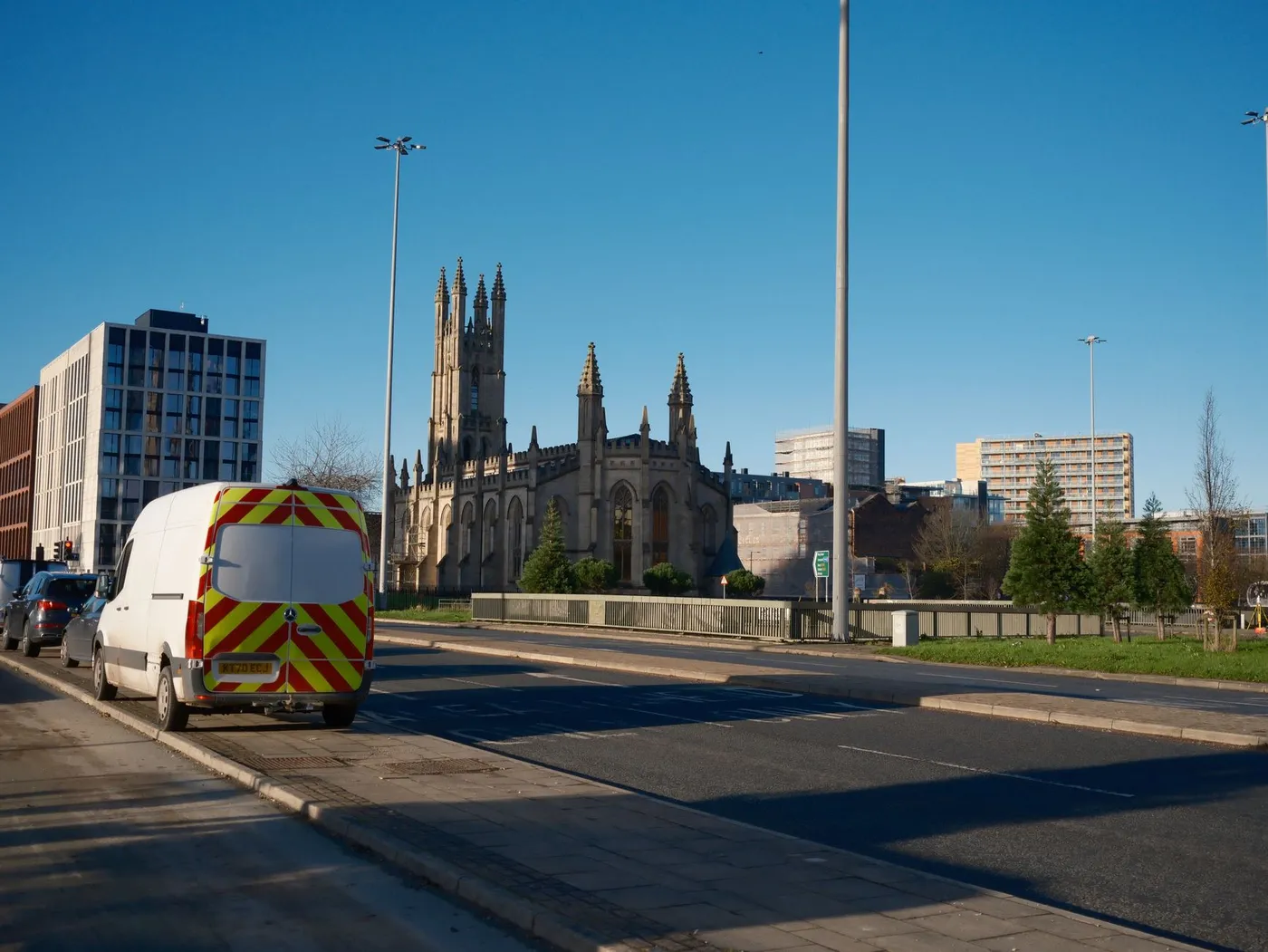
Build a shortlist of four
Four is the right number. One is not a comparison. Ten is a research project you will abandon.
Three sources are worth more than a general search:
- Ask a person. If anyone from your old church knows someone in your new city, that introduction is worth more than any amount of browsing. A named person expecting you on Sunday changes the odds enormously.
- Read the beliefs page, not the homepage. Homepages are marketing. The statement of faith, or the parish's diocese, tells you whether this is actually your tradition.
- Use a map. Distance is the single strongest predictor of whether you will still be attending in a year. The BlessUp church finder maps Christian churches across Nashville, Charlotte, Phoenix and 51 other US cities, with directions on every listing.
Distance deserves emphasis because people consistently underrate it. A church twenty-five minutes away that you love in October becomes a church you skip in February. Twelve minutes is a different habit from thirty.
A four-week plan
Compress the search. Momentum is doing more work here than discernment.
| Week | Do this | Looking for |
|---|---|---|
| One | Visit the closest church on your list | A baseline. You are calibrating, not deciding |
| Two | Visit the one that most matches your tradition | Whether the teaching is something you can sit under weekly |
| Three | Visit the remaining two, or revisit your favourite | Whether anyone spoke to you unprompted |
| Four | Go back to the strongest, and stay after | Whether there is a way in beyond the service |
Go on ordinary Sundays. A Christmas Eve service, an Easter morning, or a mid-August Sunday when half the congregation is away all give you a distorted picture. You are trying to see a normal week.
Tradition is the one criterion worth settling before you visit anywhere, because it decides more than style. It reaches as far as which books are in the Bible each tradition reads from.
What to look for once you are inside
First visits are dominated by surface impressions, which is why they are unreliable on their own. What actually happens in a service varies more by tradition than newcomers expect, and knowing the shape in advance frees you to notice the things that matter.
Four signals are worth more than the rest:
- Did anyone talk to you without being assigned to? A greeter at the door is a role. Someone in the third row turning around is a culture.
- Is the teaching from the text? Not whether you agreed, whether the sermon was actually working with a passage.
- Who is here? Any healthy congregation has a range of ages. A room entirely of one demographic tells you something.
- Is there an obvious next step? A newcomers' lunch, a class, a way to serve. Churches that have thought about how people join usually have thought about other things too.
Finding a church restores the weekly rhythm. The daily one is the harder half, and it is the one that quietly disappeared during the move. BlessUp shields your most distracting apps until you read the day's chapter, so Scripture happens on the ordinary Wednesdays too, not just on Sundays. See how the reading gate works
Moving is more common than it feels. The US Census Bureau tracks tens of millions of Americans changing address each year, and Gallup's long-running religion polling shows attendance falling fastest in exactly the life stages when people move most. The drift is structural, not personal.
When to stop looking
There is a failure mode on the other side of drifting, and it is worse than it looks: the person who visits a new church every few weeks for two years, always comparing, never belonging. Church shopping feels responsible. Past a point it is just a way of never being known.
The test is simple. If a church meets your non-negotiables, the teaching is sound, and you can imagine yourself useful there, that is enough. The remaining differences are preferences, and preferences are satisfied by commitment far more often than by continued searching.
Hebrews 10:24-25 frames the gathering as something we do for each other rather than something we consume. That reframing is what ends the search. You are not looking for the church that best serves you. You are looking for the one where you can be part of what serves other people.
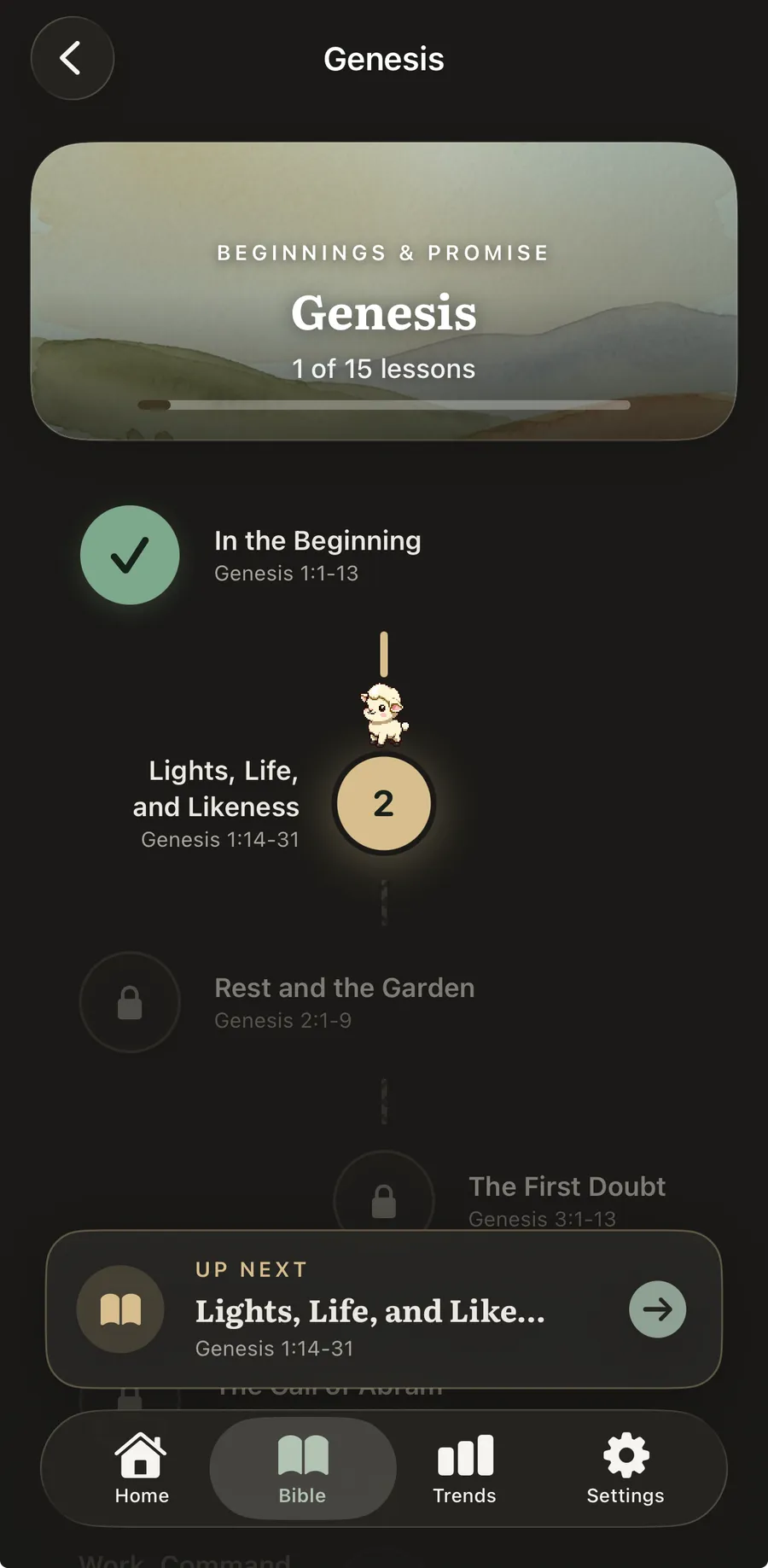
If a move is also what interrupted your daily reading, restarting a plan is a separate and simpler problem than finding a congregation.
The first year is the one that counts
Attending and belonging are different things, and the gap between them is where most people stall. Research from Lifeway Research on church attendance and connection consistently finds the same pattern: people stay where they have relationships, not where they liked the service.
The practical move is to join something small within the first three months. A group, a class, a serving team, anything with a roster and a regular time. Acts 2:42 describes the earliest church devoting itself to teaching, fellowship, breaking bread and prayer, and only one of those four happens in rows facing forward.
If you are not moving but returning after time away, the search is emotionally different even though the method is the same, and the awkwardness you are anticipating is almost always worse in prospect than in practice.
Frequently asked questions
How do I find a church in a new city?
Write down what you valued about your last church and what you wished were different, sort those into non-negotiables and preferences, then build a shortlist of about four churches using personal recommendations, each church's statement of faith, and a map. Visit all four within a month rather than spreading the search over several months.
How many churches should I visit before choosing one?
Three or four is usually right, visited within about a month. One is not a comparison and ten becomes a project you abandon. Give your strongest candidate at least three visits before deciding, because first visits tell you about the building and third visits tell you about the people.
How far away is too far for a church?
Distance is one of the strongest predictors of whether you will still be attending in a year, and people consistently underrate it. A church twenty-five minutes away that you love in October often becomes one you skip in February. Under fifteen minutes tends to produce a different habit from over thirty.
What should I look for on a first visit to a church?
Whether anyone spoke to you who was not assigned to greet people, whether the teaching worked directly with a Bible passage, whether the congregation spans a range of ages, and whether there is an obvious next step such as a newcomers' class or a way to serve. Go on an ordinary Sunday rather than Christmas or Easter.
How long should it take to find a church?
About a month of active visiting is a reasonable target. Searching much longer usually turns into church shopping, where the comparison itself becomes the habit and belonging never starts. If a church meets your non-negotiables, teaches from Scripture, and has a place you could be useful, that is enough to commit.
Your day starts in the Word, not the feed. BlessUp is free to download.
No guilt. Ever. Grace is built in. Funded by readers, never by ads.