Protestant, Catholic, and Orthodox Bibles: What Is Actually Different
By Dom · · 9 min read
Pick up a Catholic Bible after a lifetime of Protestant ones and you will find books you have never seen. Tobit. Judith. Sirach. First and Second Maccabees. Pick up an Orthodox Bible and there are more still.
This surprises people, and it can be unsettling the first time. It should not be. The difference is old, it is well documented, and it is narrower than it looks: all three traditions share an identical New Testament, and they agree on the overwhelming majority of the Old. What follows is what differs, why, and what each tradition calls the books in question. We are app builders rather than theologians, so this describes each tradition as it describes itself and leaves the adjudicating to your pastor or priest.
Key takeaways
- Protestant Bibles contain 66 books. Catholic Bibles contain 73. Orthodox Bibles contain more still, and the exact number varies between Orthodox churches.
- The New Testament is identical in all three: the same 27 books. Every difference is in the Old Testament.
- The seven books in Catholic but not Protestant Bibles are Tobit, Judith, Wisdom, Sirach, Baruch, and 1 and 2 Maccabees, plus longer versions of Esther and Daniel.
- Catholics call these deuterocanonical, meaning a second stage of the canon. Protestants call them apocrypha. The word you use signals the tradition you are in.
- Orthodox churches treat the boundary more fluidly than either, with canonical often meaning suitable to be read in the liturgy.
The short version
| Tradition | Total books | What is added beyond the Protestant canon |
|---|---|---|
| Protestant | 66 | Nothing. 39 Old Testament, 27 New Testament. |
| Catholic | 73 | Tobit, Judith, Wisdom, Sirach, Baruch, 1 and 2 Maccabees, plus additions to Esther and Daniel. |
| Orthodox | 76 and up | The Catholic list, plus books such as 1 Esdras, 3 Maccabees, and the Prayer of Manasseh. The set varies between Orthodox churches. |
Note the last row carefully. There is no single Orthodox number, and that is not an oversight. It reflects a genuinely different way of thinking about what a canon is, which we come back to below.
How the difference happened
The split that produced the shorter Protestant Old Testament has an anniversary of its own: Reformation Day, October 31, which marks the day Luther published his Ninety-Five Theses in 1517.
The split traces to a translation question that is older than Christianity.
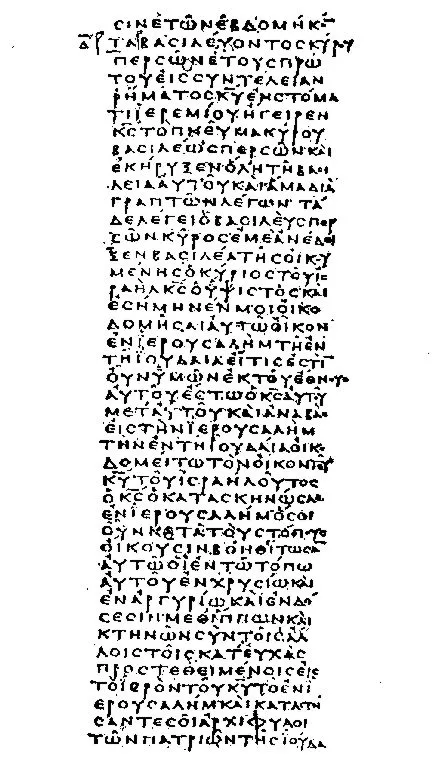
Centuries before Christ, the Hebrew Scriptures were translated into Greek for Jewish communities living around the Mediterranean. That translation, the Septuagint, circulated widely and included books that were not part of the Hebrew collection that later became standard in Judaism. The early church, which spoke and wrote Greek, largely used the Septuagint. Many of its quotations of the Old Testament come from it.
So the church inherited a wider collection. It stayed wide for most of Christian history. During the Reformation, Protestant reformers returned to the shorter Hebrew collection for the Old Testament, on the reasoning that the Hebrew canon was the one Israel itself had received. The Catholic Church, at the Council of Trent, affirmed the wider list. The Orthodox churches, which had never framed the question the same way, largely carried on as they were.
John Meade's explanation at the Text & Canon Institute is a careful and readable account of this history if you want the longer version. What matters for a reader today is simply that this was a considered disagreement about which collection the church had received, not an argument about whether to add or remove books on a whim.
_(The_S.S._Teacher%27s_Edition-The_Holy_Bible).jpg)
The seven books, and what they are
If you have only read a Protestant Bible, these are the ones you have not met.
- Tobit is a family narrative about faithfulness, marriage, and an angelic companion on a journey.
- Judith tells of a widow who saves her city from an invading army.
- Wisdom, sometimes called the Wisdom of Solomon, is a reflection on righteousness, mortality, and the wisdom of God.
- Sirach, also called Ecclesiasticus, is a long book of practical wisdom in the vein of Proverbs.
- Baruch is associated with Jeremiah's scribe and deals with exile and repentance.
- 1 and 2 Maccabees recount the Jewish revolt against Seleucid rule. They are the historical background to Hanukkah.
There are also longer forms of Esther and Daniel in the Catholic and Orthodox canons, containing material such as the Prayer of Azariah and the story of Susanna. The United States Conference of Catholic Bishops lists the full Catholic order if you want to see how it is arranged.
If you are new to reading Scripture at all and this is already more detail than you wanted, where to start reading the Bible is the better first stop. None of the canon question affects the Gospels, which is where almost everyone should begin.
Deuterocanonical or apocrypha? The word matters
These same books carry two names, and the choice is not neutral.
Deuterocanonical is the Catholic term. It means something like second canon, indicating that these books entered the canon at a later stage than the rest, while being fully canonical Scripture.
Apocrypha is the common Protestant term, from a Greek word meaning hidden or obscure. In Protestant use it marks these books as valuable and worth reading but not Scripture, and not a basis for doctrine.
If you are talking with someone from another tradition, using their word for these books is a small courtesy that goes a long way. It is also the fastest way to signal that you have actually understood the disagreement rather than assumed one side of it.
Why the Orthodox answer is different in kind
The same East–West split shows up in the calendar as well as the canon: All Saints’ Day falls on two different dates depending on which tradition is keeping it.
Ask how many books are in the Orthodox Bible and you will get an unsatisfying answer, because the question assumes a framework Orthodoxy does not quite use.
As Catholic Answers notes in comparing the two, the Eastern churches never produced a single binding enumeration in the way the Council of Trent did for Catholics. Canonical in Orthodox usage often means something closer to appropriate to be read in the liturgy, and the precise list can vary between the Greek, Russian, and other Orthodox churches. A parish explanation from an Orthodox church makes the same point from the inside: the tradition is more comfortable with a soft edge than Western Christianity has been.
That is not vagueness. It is a different theology of how Scripture sits inside the life of the church.
What this means for your reading plan
It also changes the size of the job. The Catholic canon runs 103,779 words longer than the Protestant one and the Orthodox canon 154,344 longer, which we break down in our full word count of all three canons.
Practically, three things follow.
Your canon changes how long a year takes. More text means more reading. The difference is real but small: about nine minutes a day for the Protestant canon, 10.3 for Catholic, 10.9 for Orthodox. We show the full arithmetic in how long it takes to read the Bible in a year.
Your tradition usually implies a translation. Catholic readers in the United States typically use the NABRE, which is the translation the USCCB publishes. Orthodox readers often use the NKJV. Protestant readers most often use the NIV or ESV. These are conventions rather than rules, but they are strong ones, and a study Bible in your tradition's translation will have notes written for the way your church reads.
Commentary differs more than the text does. This is the part people underestimate. Two traditions can read an identical passage and draw genuinely different emphases from it, and neither is being careless. If you have only ever read notes from one tradition, reading the same chapter through another's eyes is one of the more useful things you can do.
This is the problem BlessUp was built around. Every one of its 372 study lessons carries four independently written commentaries, Non-Denominational, Protestant, Catholic and Orthodox, so the same passage is explained in your own tradition rather than someone else's. Your answer at setup also routes which canon you read and which translation you get. See how the reading plans differ by tradition.
A daily verse in your own translation is a low-effort way to start noticing the difference, and a daily Bible verse app covers that habit.
Where the three traditions agree
It is worth ending here, because the differences are easier to list than the agreement and that gives a false impression of the scale.
All three share the same 27-book New Testament. All three read the same Torah, the same Psalms, the same prophets, the same Gospels, the same letters of Paul. The overwhelming majority of the text is identical, and the disagreement concerns the boundary of one section of the Old Testament.
Paul's line to Timothy is one all three affirm: "All Scripture is God-breathed and is useful for teaching, rebuking, correcting and training in righteousness" (2 Timothy 3:16, NIV). The traditions differ on where the edge of that collection sits. They do not differ on what it is for.
If you are trying to work out which tradition you belong in, or looking for a congregation after a move, that is a conversation for real people rather than an article. The BlessUp church finder lists churches by US city, and visiting two or three is worth more than any amount of reading about the differences.
If reading this has you wondering where to actually attend, finding a church in a new city is a practical next step, and knowing what happens in a service removes most of the awkwardness of a first visit.
Frequently asked questions
How many books are in the Catholic Bible compared to the Protestant Bible?
The Catholic Bible has 73 books and the Protestant Bible has 66. The seven additional books are Tobit, Judith, Wisdom, Sirach, Baruch, and 1 and 2 Maccabees. Catholic Bibles also contain longer versions of Esther and Daniel.
Do Catholics and Orthodox Christians use the same Bible?
Not quite. Orthodox Bibles include everything in the Catholic canon and then some, such as 1 Esdras, 3 Maccabees, and the Prayer of Manasseh. There is also no single Orthodox list, because the exact set varies between Orthodox churches.
What is the difference between deuterocanonical and apocrypha?
They usually refer to the same books but reflect different views of them. Deuterocanonical is the Catholic term and means a second stage of the canon, treating the books as fully Scripture. Apocrypha is the common Protestant term and marks them as worth reading but not Scripture.
Is the New Testament the same in all three traditions?
Yes. Protestant, Catholic, and Orthodox Bibles all contain the same 27 New Testament books in the same form. Every canonical difference between the three is in the Old Testament.
Which Bible translation should I read for my tradition?
Catholic readers in the United States commonly use the NABRE, Orthodox readers often use the NKJV, and Protestant readers most often use the NIV or ESV. These are conventions rather than requirements, but a study Bible in your tradition will carry notes written for the way your church reads.
Your tradition, your canon, your translation. BlessUp is free to download.
No guilt. Ever. Grace is built in. Funded by readers, never by ads.