How to Meditate on Scripture
By Dom · · 10 min read
The sermon ended with a line you have heard many times: meditate on this passage this week. You nodded. Then Tuesday came, and you sat down with the verse, and you were not sure what to do next. Stare at it? Clear your head? Wait for a feeling?
If the instruction has always sounded vague, that is because it usually arrives without a method. The good news is that the church already has one. It has four named steps, it fits in ten minutes, and it asks nothing of you except a short passage and your attention.
Key takeaways
- Christian meditation means filling your mind with a text, turning it over slowly, rather than emptying your mind.
- The church's long-standing method is lectio divina, in four movements: read, meditate, pray, rest.
- A workable session is about ten minutes on a short passage of a few verses, not a whole chapter.
- The silent last step is the hardest. In 11 studies, most people did not enjoy 6 to 15 minutes alone with their thoughts.
- If nothing comes, that is normal. Go back and read the passage again; the method does not depend on a feeling.
What Christian meditation is, and what it is not
When most people hear "meditation," they picture sitting still and trying to empty the mind. That is not what the Bible means when it talks about meditating on God's word.
The first psalm describes a person "whose delight is in the law of the LORD, and who meditates on his law day and night" (Psalm 1:2, NIV). Look at what the verse puts in the middle: a text. The meditation has an object. It is something you do with Scripture, over and over, until it has settled into you.
So Christian meditation is closer to filling than emptying. You take a few words in, and you stay with them. That is the whole difference, and it is enough. You do not have to reach a special state of mind. You have to read slowly and keep coming back.
It is also different from Bible study. Study asks what a passage meant to its first readers, using context and cross-references. We walk through that method in how to study the Bible. Meditation asks something else: what is this saying to me, today, and how do I answer? Both are good. They are different jobs, and it helps to know which one you are doing.
The method the church already has: lectio divina
You do not need to invent a technique. Lectio divina, Latin for "divine reading," is an old Christian way of praying with Scripture.
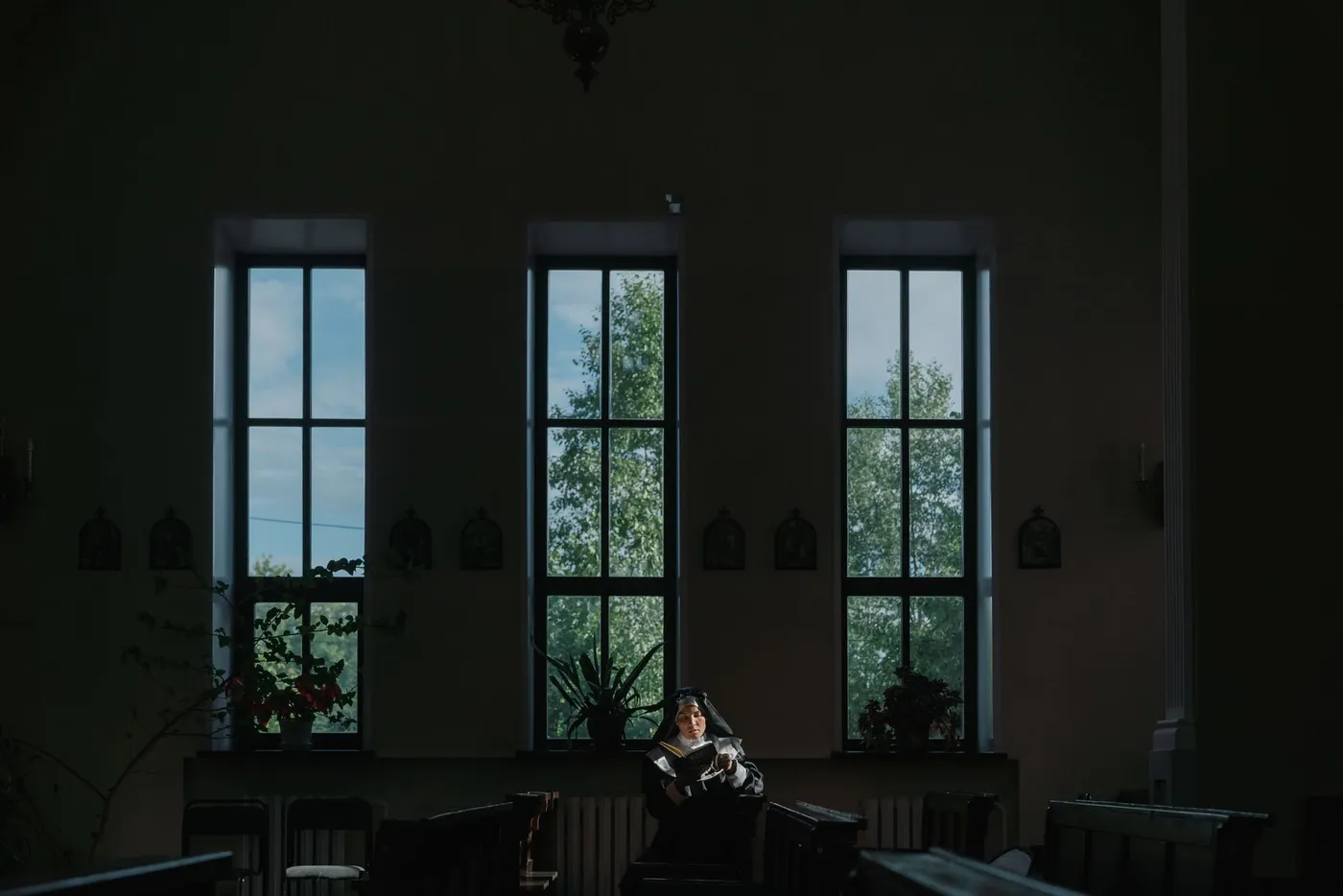
Fr. Luke Dysinger, a Benedictine monk, calls it "a very ancient art, practiced at one time by all Christians", and describes it as a slow, contemplative praying of the Scriptures. He notes it was kept alive among Benedictine monks and oblates. It is not only a Catholic practice now. Richard J. Foster, whose ministry Renovaré was founded in the Quaker tradition, commends it to a wide Protestant readership. In his short piece on lectio divina he compares spiritual reading to letting a mint dissolve in your mouth, rather than eating. Normal reading is fast and aims at information. This kind is slow and aims at God.
Two traditions, one practice. Nobody has to adopt the other's theology to use it, and no church requires it. It is simply a well-worn path you can borrow.
The four movements, one at a time
Dysinger names four steps. They blend into one another in practice, but it helps to learn them separately.
- Lectio (read). Read the passage slowly, more than once. You are listening for a word or phrase that stands out today. Not the most important word, just the one that catches.
- Meditatio (meditate). Take that word or phrase and turn it over. Dysinger uses the old image of a ruminant animal chewing its cud. Repeat the phrase to yourself. Let it meet your thoughts, your worries, your plans for the day.
- Oratio (pray). Answer God in your own words. Talk to Him about what the phrase stirred up. Dysinger describes this as conversation, and as offering up the parts of yourself that the word has touched.
- Contemplatio (rest). Stop talking. Rest quietly in God's presence for a minute or two, without trying to produce anything.
Here is the same thing as a ten-minute plan you can follow.
| Movement | What you actually do | About how long | What usually ends it |
|---|---|---|---|
| Lectio (read) | Read two to four verses slowly, twice or three times, and notice one phrase | 3 minutes | Reading too much, or reading fast to "get through it" |
| Meditatio (meditate) | Repeat that phrase and let it connect to your own day | 3 minutes | Switching to study mode and reaching for a commentary |
| Oratio (pray) | Speak to God about what the phrase raised, in plain words | 2 minutes | Feeling you need the "right" words |
| Contemplatio (rest) | Sit quietly in God's presence without adding anything | 2 minutes | The urge to do something, often to pick up the phone |
A ten-minute worked example
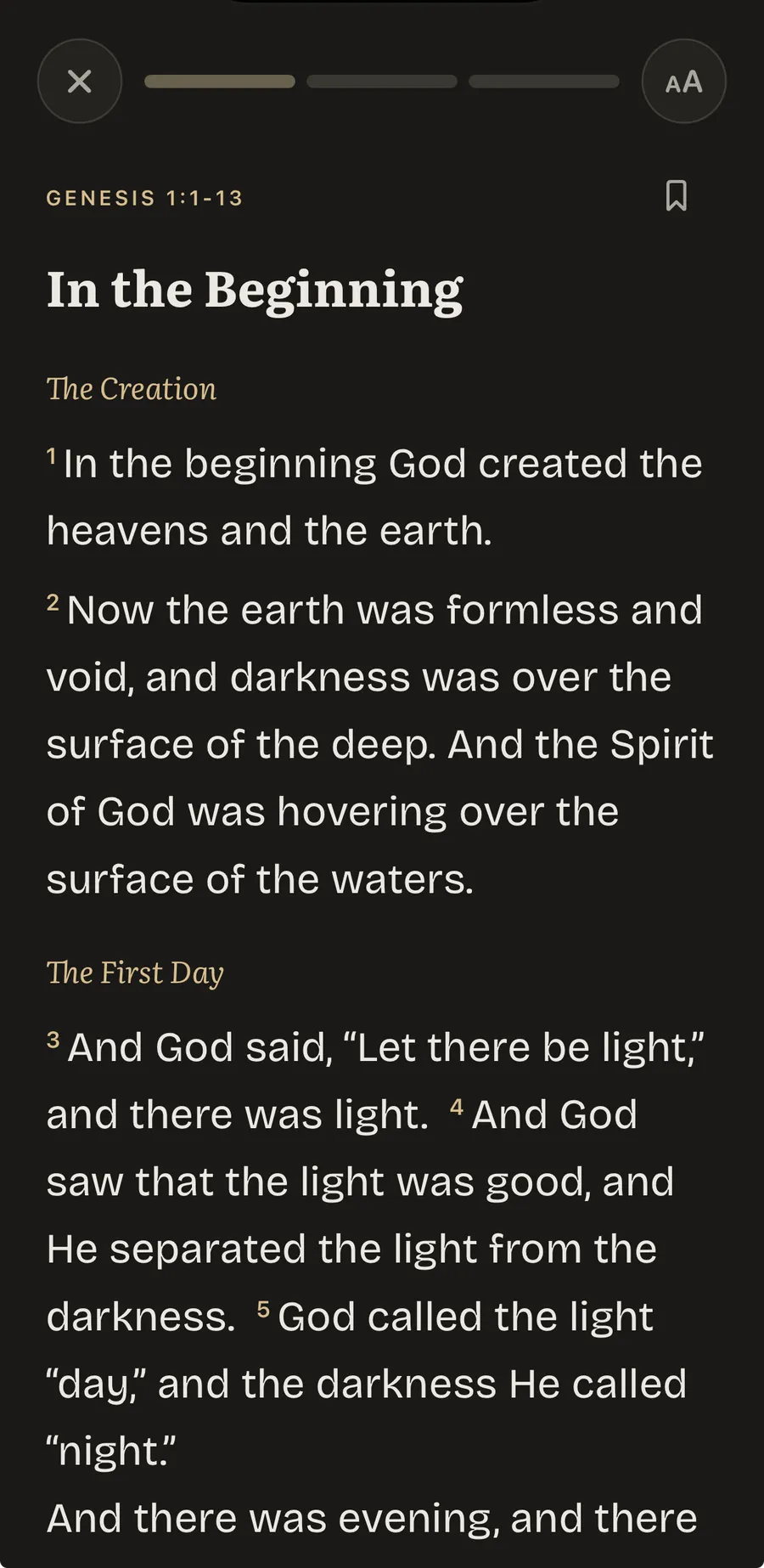
Take the first three verses of Psalm 1. It is short, and it happens to be about meditation.
Minutes 0 to 3, read. Read the three verses slowly, out loud if you can. Read them again. On the second pass, suppose the words "day and night" catch. Stop there.
Minutes 3 to 6, meditate. Repeat "day and night" a few times. What does it bring up? Maybe that your days feel split between the part that belongs to God and the part that belongs to work. Maybe you notice that the phrase does not say "for an hour each morning." Stay with whatever comes, without judging it.
Minutes 6 to 8, pray. Tell God what you noticed. "I keep You in the morning and forget You by lunch. I would like this to go with me into the day." Short and honest is fine.
Minutes 8 to 10, rest. Say nothing. If your mind wanders, bring back the phrase "day and night" once, gently, and let it go again. Then get up and start your day.
That is a whole session. Tomorrow you might stay with the same verses, or move on to the next few. If choosing the passage is where the ten minutes disappear, what to read when you only have ten minutes suggests short readings that suit this.
Meditation goes best when the passage is already chosen and you are not deciding where to start. BlessUp has the day's reading waiting every morning, marked on a quiet reading page with no timers or scores, and reading it is what opens the apps you have chosen to shield. Each study lesson also carries four separately written commentaries, Non-Denominational, Protestant, Catholic and Orthodox, so you can sit with a passage as your own tradition reads it. See where tomorrow's reading starts
When nothing comes
Some mornings no phrase stands out. You read the verses three times and they stay flat on the page. That is normal, and it is not a sign you are doing it wrong.
Lectio divina does not depend on a feeling. It depends on returning. If nothing catches, pick any phrase and stay with it anyway. Or read the passage once more, slower. Or simply pray, "I don't hear anything today, but I am here." That prayer counts.
It also helps to remember that meditation builds over time. A phrase you sat with on a flat Tuesday may come back to you in the car on Friday. Many people find the fruit shows up later, not during the session.
If you find yourself stuck for weeks, or unsure whether what you are hearing is sound, please talk to your pastor or a spiritual director. We build tools, not spiritual direction. Our FAQ page covers what the app does and does not do.
Why this is harder now
The hardest step for most people is the last one, the quiet rest. There is a reason.
In 2014, Timothy Wilson and colleagues ran 11 studies in which people were left alone in a room with nothing to do but think. Participants, mostly students and some community members, typically did not enjoy spending 6 to 15 minutes that way, and many preferred to give themselves mild electric shocks rather than sit with their thoughts. They were not praying, and the room was bare. But the finding explains why contemplatio is the step people skip. Sitting without input feels unusual now, and most of us are out of practice.
Sustained time with one text is also rarer than it used to be. Pew Research Center's 2023-24 Religious Landscape Study found that 61% of US adults seldom or never read scripture outside religious services, and 22% do so weekly. If staying with three verses feels strange, you are in wide company.
None of this means you cannot do it. It means start small. Two minutes of rest is plenty at first. Put the phone in another room before you begin, so the easiest escape is not in your hand. And pair meditation with a steady reading rhythm, so there is always a next passage waiting. A plan like reading the Bible in a year at about nine minutes a day supplies the text; lectio divina is one way to slow down inside it. For where this fits in a morning, see how to have a quiet time with God, and for more on daily practices, browse our spiritual discipline posts.
Frequently asked questions
What does it mean to meditate on Scripture?
It means taking a short passage and staying with it slowly: reading it more than once, repeating a phrase that stands out, talking to God about it, and resting quietly. Psalm 1:2 describes a person who meditates on God's law day and night. The focus is a text, not an empty mind.
How is Christian meditation different from other kinds of meditation?
Christian meditation has an object: the words of Scripture and the God who speaks through them. Rather than emptying the mind, you fill it with a short passage and respond to God in prayer. It is a way of reading and praying, not a technique for reaching a mental state.
What is lectio divina?
Lectio divina, Latin for divine reading, is an old Christian way of praying with Scripture in four movements: lectio (read slowly), meditatio (turn a phrase over), oratio (respond to God in prayer) and contemplatio (rest quietly in God's presence). It was kept alive in Benedictine communities and is now used across many traditions.
How long should you meditate on a Bible verse?
About ten minutes is a good start: roughly three minutes reading, three meditating, two praying and two resting. Choose two to four verses rather than a whole chapter. You can stay with the same passage for several days.
What do I do if I don't feel anything?
Keep going anyway. Lectio divina does not depend on a feeling. Read the passage once more, pick any phrase and stay with it, or simply tell God you are there. Many people find a phrase returns to them later in the day or week.
Small daily readings, cover to cover. That is the whole plan.
No guilt. Ever. Grace is built in. Funded by readers, never by ads.