How to Actually Finish a Bible Reading Plan
By Dom · · 13 min read
You have started before. Maybe on a January the first, maybe on a birthday, maybe on an ordinary Tuesday when something in a sermon landed. You read Genesis with real attention. You got through the flood and the tower and Abraham, and somewhere in the middle of a chapter about which fabrics may be woven together, the whole thing quietly stopped.
That is not a character flaw and it is not unusual. What it is, is predictable — which is the useful part. Plans do not break at random. They break in four or five specific places, for reasons you can see coming from a long way off, and every one of them can be decided about in advance.
Key takeaways
- Starting is not the hard part. A one-year Protestant plan asks for 1,986 words a day, about nine minutes at a normal reading pace. That number never changes; how it feels changes enormously.
- Month three is the real test, not week one. Habit automaticity plateaus after an average of 66 days, with wide variation between people and behaviours.
- A missed day is not the break point. In the study behind that 66-day figure, missing an occasional opportunity did not seriously impair habit formation; the gains resumed.
- Changing pace is a plan feature, not a defeat. Moving from a 365-day plan to 180 or 90 days keeps every reading you have already completed and simply recomputes the day number.
- Finishing is worth defining before you need to. All-or-nothing is the definition most likely to end a plan in March.
Starting is the easy part
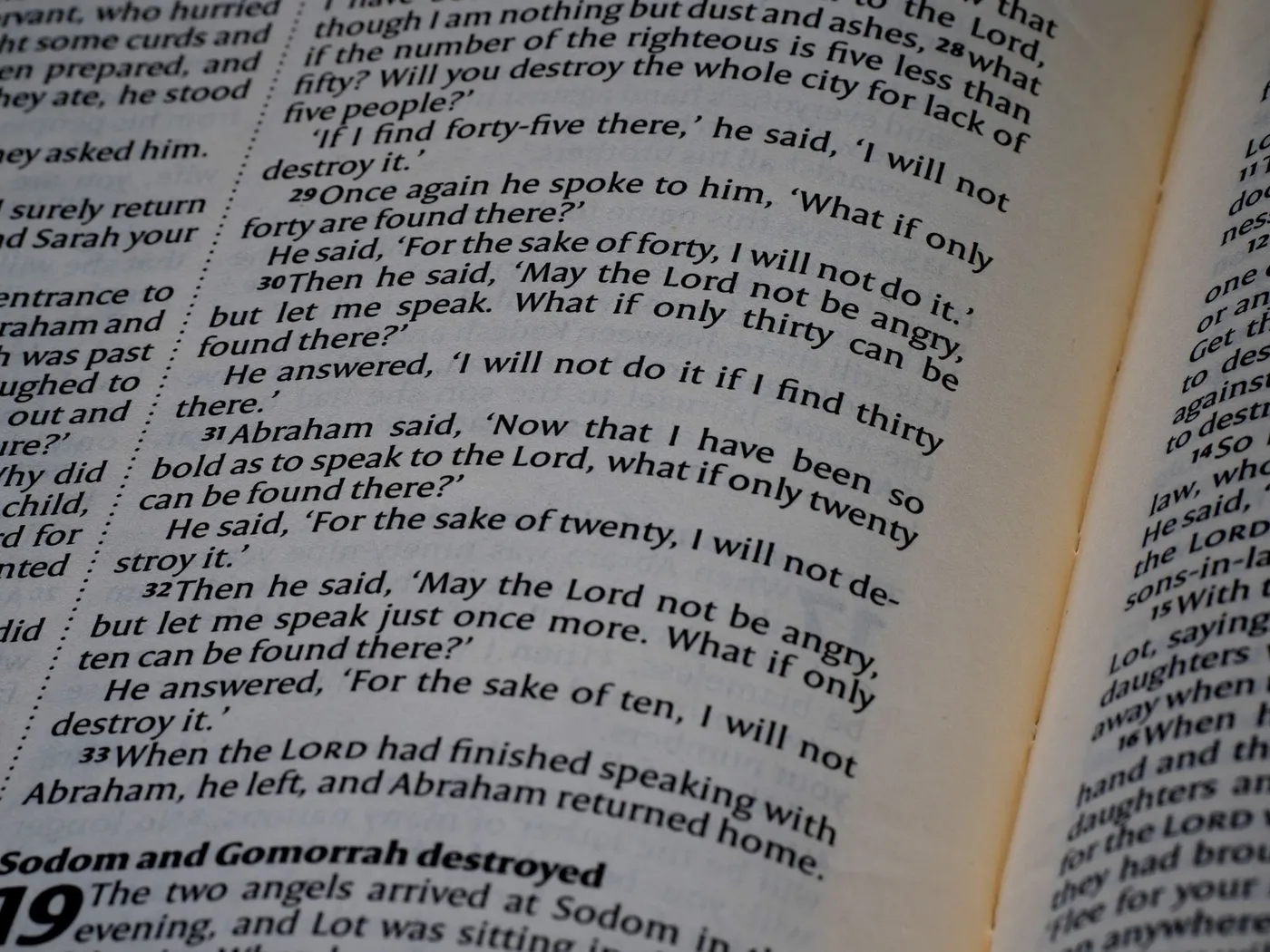
The internet is extremely good at helping you begin. There are plans for every season, every length, every tradition, and a genuinely useful post on how to actually start a Bible reading plan for anyone who has not picked one yet. What almost nobody writes about is the second half of the problem, which is that the advice that gets you started is precisely the advice that fails you later. Enthusiasm, a fresh January, a new plan — none of those things are available to you in March, because by March they are what you have already spent.
It helps to know that daily reading is not the norm even among committed churchgoers. In a survey of 2,130 U.S. Protestant churchgoers conducted in March 2025, Lifeway Research found 61% read the Bible regularly and 31% read it every day. That is a group who identify as Protestant or non-denominational and attend services at least monthly — people who have already decided this matters. Two-thirds of them are not doing it daily either.
Nor is interest the missing ingredient. American Bible Society's State of the Bible: USA 2026, built on 2,649 interviews with adults across all 50 states and the District of Columbia in January 2026, found the curious-but-not-engaged "Movable Middle" at 28% of the population — nine million people larger than it was in 2024 — while the Scripture Engaged segment sat around 17%. Plenty of people are open. Fewer are finishing. The gap between those two numbers is not about desire, and it is worth saying plainly that it is not about discipline either.
Where Bible reading plans actually break
Start with the arithmetic, because it explains more than it looks like it should. A one-year Protestant plan covers 724,811 words in 365 portions. That is 1,986 words a day, which is almost exactly nine minutes at a normal reading pace of 220 words per minute. The Catholic canon runs to 828,590 words, or about 10.3 minutes a day; the Orthodox canon to 879,155 words, about 10.9. The full arithmetic, canon by canon, is laid out in how long it takes to read the Bible in a year.
Here is the thing worth noticing. That daily number does not move. Day 40 is the same 1,986 words as day 1. The plan is perfectly even, and the experience of it is not even at all — which means the difficulty you hit in Leviticus is not extra work. It is identical work that has stopped paying you back at the rate you had got used to.
That reframing matters, because the usual explanation ("I lost discipline") describes a personal failure, and the arithmetic describes something structural instead. Nothing about you changed on the day the narrative stopped. The reward did.
The four places this shows up are predictable enough to plan around. Note that this map is an argument from how the plans are built, not a measurement of reader behaviour — no one publishes reliable drop-off data for Bible reading plans, and any post that quotes you a precise completion rate is guessing.
| The break point | What actually changes | Decide this in advance |
|---|---|---|
| The Leviticus stretch | Nothing in the workload — still about 1,986 words, still about nine minutes. The narrative pull disappears, so identical effort starts to feel heavier. | That you will read it slower and understand less of it, and that this is allowed. Reach for a study note rather than for a different plan. |
| Month three | The novelty is gone and the habit is not yet automatic. This is the gap the research describes, and it is the single most likely place to stop. | What the minimum version of a reading day looks like when you are tired, and where in the day it happens. |
| A missed week | Nothing structural, but a visible backlog appears — roughly 14,000 words if you try to repay seven days at once. | That you will never read the backlog. You resume at today's portion, or you change the pace. |
| The prophets | Long books, unfamiliar names, and very little forward momentum, arriving when you are already deep into the year. | Whether to keep the year-long pace here or slow to 180 days for the stretch. Either is finishing. |
The month-three problem
Most advice about habits gives you a number of days and tells you to survive them. The number people usually quote is 21, and it does not come from research on habits at all.
The figure that does come from research is 66. Writing in the British Journal of General Practice, Gardner, Lally and Wardle summarised work in which participants repeated a self-chosen daily behaviour in response to a single cue in their own environment. Subjective automaticity rose sharply at first, then slowed to a plateau after an average of 66 days — with, as the authors are careful to say, considerable variation across participants and behaviours.
Two details in that paper matter more for reading plans than the headline number.
The first is that automaticity built faster for simple actions, like drinking a glass of water, than for more elaborate routines. Reading a chapter is not a simple action. It needs a surface, a place in the day, and about nine minutes of attention. It is reasonable to expect it to sit at the slower end of that range, which puts the plateau somewhere past month two — right where most plans are quietly abandoned.
The second is the more encouraging one, and it is dealt with next.
What to do about the hard stretches and the missed days
In the same body of work, missing the occasional opportunity to perform the behaviour did not seriously impair habit formation. Automaticity gains resumed after a single missed performance. The miss, in other words, is not the thing that ends a plan.
What ends a plan is what happens next. One missed day becomes a backlog; the backlog becomes a debt; the debt turns a nine-minute habit into a forty-five-minute obligation you now have to schedule. Nobody quits reading Scripture. People quit the debt. That distinction is worked through properly in what to do when you miss a day, and the mechanics of building a rhythm that survives it are in why streaks make people quit, and what grace days do instead.
So the rule to set now, while nothing has gone wrong: you do not read the backlog. When you come back, you come back to today's portion. If you want the missed chapters, read them later as reading, not as repayment.
And for the stretches that are hard rather than missed — the legal material, the genealogies, the long prophets — the move is to lower the expectation rather than the frequency. You are not going to get as much out of a census as out of the Gospels, and pretending otherwise is what makes people feel they are doing it wrong. Read it, let it be flat, and keep the appointment.
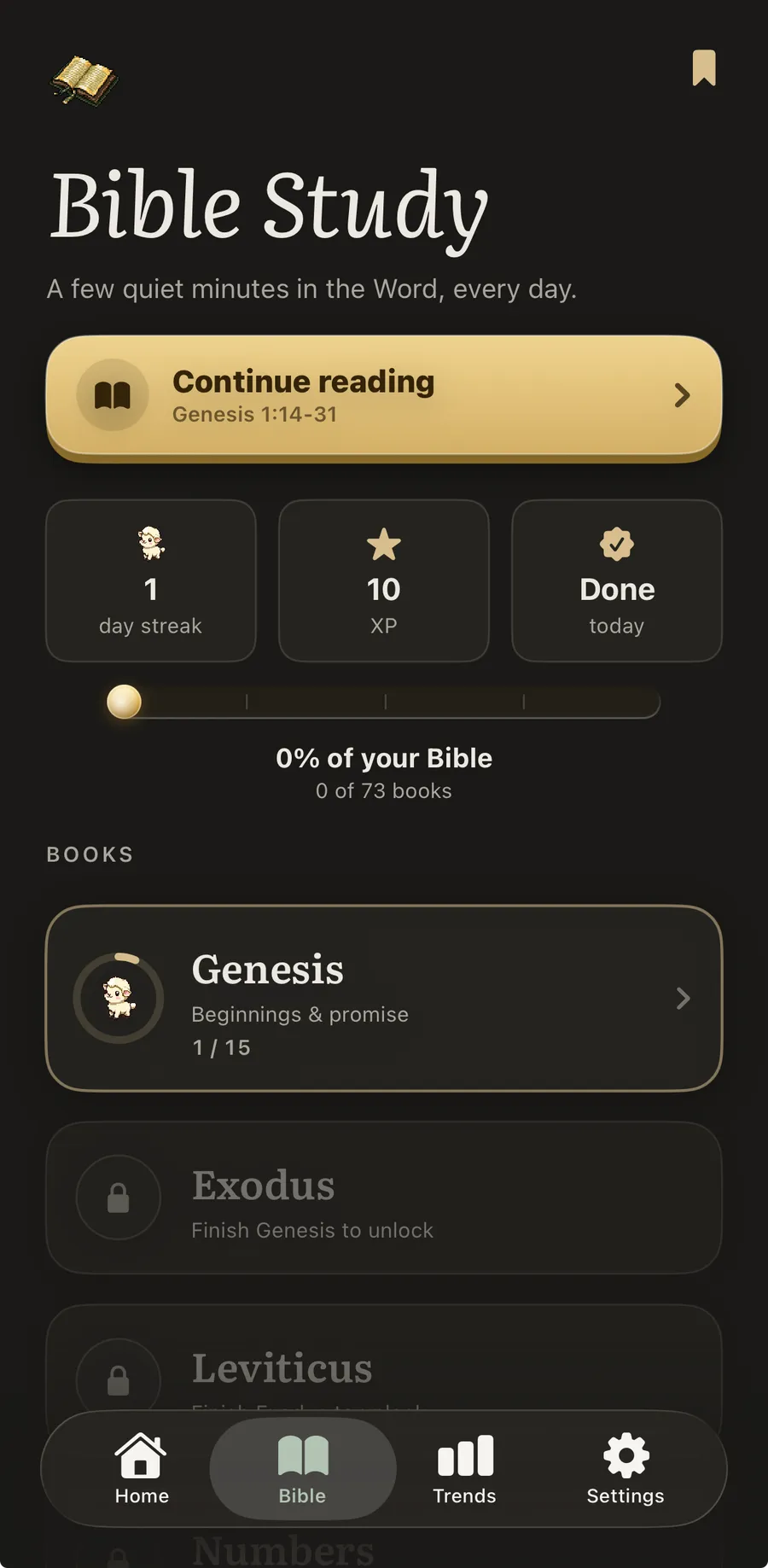
The three things that actually decide whether a plan gets finished are all mechanical: something has to hold your place, a missed day has to cost nothing, and slowing down has to be allowed. BlessUp does all three — your place is held for you, one missed day is covered by a grace day automatically, and the pace picker lets you move between 365, 180 and 90 days without losing a single reading you have already done. See how the plan holds your place.
Changing pace is not quitting
This is the decision most readers do not know they are allowed to make, so it is worth stating precisely.
A reading plan has two variables: how much Scripture, and over how long. Nearly everyone treats the first as fixed and the second as sacred, which leaves only one way to fail. But the length is the adjustable part. In BlessUp, the same plan runs at 365, 180 or 90 days, and switching between them preserves every completed reading and simply recomputes which day you are on. You do not restart. You do not lose Genesis. The plan re-spaces itself around the reader you actually are this month.
Which turns the March decision from a binary into a dial. The question stops being "am I still doing this or have I failed" and becomes "what pace is honest for the next eight weeks". Those are very different questions, and only one of them has an answer that keeps you reading.
It is worth saying that slowing down is the option people resist hardest, because it feels like an admission. It is closer to the opposite. Choosing a pace you can hold is the single clearest signal that you intend to finish.
What finishing actually means
Define this now, before you need it, because the definition you inherit by default is all-or-nothing and it is the one most likely to end your plan.
An all-or-nothing definition says: 365 readings, in 365 days, no gaps, or it does not count. Under that rule a person who reads Scripture on 300 days out of 365 has failed, which is an obviously absurd conclusion and yet it is the one that makes people stop in March.
A better definition: you finished if you read the whole thing. The calendar was scaffolding. Genesis to Revelation over fourteen months is a completed reading of Scripture; it is not a year-long plan with an asterisk.
Scripture is unhurried about this in a way the habit literature is not. "Let us not become weary in doing good, for at the proper time we will reap a harvest if we do not give up" (Galatians 6:9, NIV) — the promise is attached to not giving up, not to a deadline. And Paul writes to the Philippians with a confidence that has nothing to do with their consistency: "being confident of this, that He who began a good work in you will carry it on to completion" (Philippians 1:6, NIV). Completion, in that sentence, is something held rather than something achieved.
So: decide the missed-day rule before you miss a day. Decide what happens in Leviticus before you are in Leviticus. Decide that changing pace is a permitted move rather than a defeat. And if you have started a plan before and not finished it, that is ordinary, and it is not evidence about you — the plans mostly do not come with these decisions built in, so people make them under pressure, badly, in March. Our frequently asked questions cover how the pace picker and grace days work in practice.
Finishing is not a matter of being the sort of person who finishes. It is a set of decisions made before you needed them.
Frequently asked questions
Why do most people not finish a Bible reading plan?
Usually because the plan was designed for the reader they were in week one rather than the reader they are in month three. The early enthusiasm that gets a plan started is exactly what runs out, and most plans have no provision for that moment: no rule for a missed day, no way to change pace, and no definition of finishing short of perfect completion. The stretches that feel hardest — long legal sections, genealogies, the prophets — arrive well after that enthusiasm has gone.
What do you do if you fall behind on a reading plan?
Do not try to read the backlog. Catching up turns a nine-minute habit into an hour-long debt, and the debt is what people quit, not the reading. Pick up at today's reading and let the missed days go, or change the pace so the plan matches the life you actually have. Research on habit formation found that missing an occasional opportunity did not seriously impair the process, and that automaticity gains resumed after a single missed performance.
Should you switch plans if you are struggling?
Switching plans is usually the wrong lever, because it resets your progress and the new plan will meet the same hard stretches in the same order. Changing pace is the better move: the same plan, spread over more days. In BlessUp, switching between the 365, 180 and 90 day paces preserves every completed reading and recomputes the day number, so slowing down costs you nothing you have already read.
Is it better to read the Bible in a year or take longer?
Whichever one you will still be doing in April. A year is a good default because the arithmetic is manageable — about nine minutes a day for the Protestant canon, a little more for the Catholic and Orthodox canons — but there is nothing sacred about twelve months. A slower pace that gets finished is a completed reading of Scripture. A one-year plan abandoned in Leviticus is not.
Finishing is not a matter of being the sort of person who finishes. It is a set of decisions made before you needed them.
No guilt. Ever. Grace is built in. Funded by readers, never by ads.