Bible Verses for Christmas: The Story in Order
By Dom · · 12 min read
Somebody hands you the Bible after dinner and asks you to read the Christmas story, and you realise you are not certain where it starts. Luke, probably. But there are wise men somewhere, and something about a prophecy, and the search you end up doing on your phone returns a page of fifty verses in no particular order, none of which is an answer to the question you actually asked.
The question was: what do I read, in what order, and how long will it take. That has a real answer, and churches settled on it more than a century ago.
Key takeaways
- The whole Christmas story is about 1,950 words - roughly nine minutes read silently, or fourteen read aloud. It is much shorter than people assume.
- If you read only one passage, read Luke 2:1–20: 387 words, under two minutes, and it contains the manger, the shepherds and the angels.
- Nine readings, fixed since 1918, are the order King’s College, Cambridge has used every Christmas Eve, running from Genesis 3 to John 1.
- Matthew and Luke tell different halves. There are no shepherds in Matthew and no wise men in Luke; the nativity scene is a merger of the two.
- 90% of US adults celebrate Christmas and 55% keep it as a religious holiday, in a Pew Research Center survey of 1,503 adults in 2017.
If you only read one passage, read Luke 2:1–20
Luke 2:1–20 is the Christmas story as most people picture it: the census, the journey, no room, the manger, the shepherds in the fields, the angel, the sky full of praise. It runs 387 words. Read silently that is under two minutes. Read aloud, unhurried, with a room half listening, it is closer to three.
It also carries the sentence the season leans on, in the NIV rendering of Luke 2:10–11: “Do not be afraid. I bring you good news that will cause great joy for all the people. Today in the town of David a Savior has been born to you; he is the Messiah, the Lord.”
If somebody hands you a Bible on Christmas Eve, that is the passage. You do not need a list.
The whole Christmas story is about 1,950 words
Here is the thing the fifty-verse listicles never tell you: the Christmas story is short. Not short in the sense of a single verse on a card — short in the sense that you can read all of it, prophecy through fulfilment, in the time it takes for coffee to brew.
The clearest proof of that is a service that has been running for over a century. In 1918, Eric Milner-White, then Dean of King’s College, Cambridge, introduced A Festival of Nine Lessons and Carols, adapting an order of service written by E. W. Benson for Truro Cathedral on Christmas Eve in 1880. King’s has kept the same nine readings ever since, and has broadcast them since 1928. The college is blunt about where the weight sits: the pattern and strength of the service, it says, derive from the lessons and not the music.
Those nine readings are a hundred years of editorial judgment about what the Christmas story is, so it is worth knowing how long they take.
| Lesson | Passage | What happens | Words | Minutes |
|---|---|---|---|---|
| 1 | Genesis 3:8–19 | What went wrong in the garden | 336 | 1.5 |
| 2 | Genesis 22:15–19 | The promise to Abraham | 111 | 0.5 |
| 3 | Isaiah 9:2, 6–7 | A child is born | 111 | 0.5 |
| 4 | Isaiah 11:1–9 | The shoot from the stump of Jesse | 236 | 1.1 |
| 5 | Luke 1:26–38 | Gabriel visits Mary | 271 | 1.2 |
| 6 | Luke 2:1–7 | The birth | 132 | 0.6 |
| 7 | Luke 2:8–20 | The shepherds and the angels | 255 | 1.2 |
| 8 | Matthew 2:1–12 | The wise men | 271 | 1.2 |
| 9 | John 1:1–14 | The Word became flesh | 227 | 1.0 |
| All nine | — | Creation to incarnation | 1,950 | 8.9 |
Nine minutes, silently. Read aloud at a normal speaking pace of roughly 140 words a minute, closer to fourteen. That is the entire arc — the garden, the promise, the prophets, the annunciation, the birth, the shepherds, the magi, and the reason any of it matters — in less time than most families spend deciding what to watch afterwards.
Luke and Matthew are telling different halves
If you would rather read the narrative straight through than pull the verses out of it, where to read the Christmas story in the Bible lays out all twelve passages in the order the events happen, with the reading time for each.
Luke tells it from Mary’s side and from below. He gives you Gabriel, the Magnificat, the census, the manger, and shepherds — agricultural night-shift workers, the least official witnesses imaginable. Matthew tells it from Joseph’s side and from above: the dreams, the genealogy, the magi following a star, Herod, and the flight into Egypt. Mark skips the birth entirely and opens with an adult Jesus. John does something else again, which we will come to.
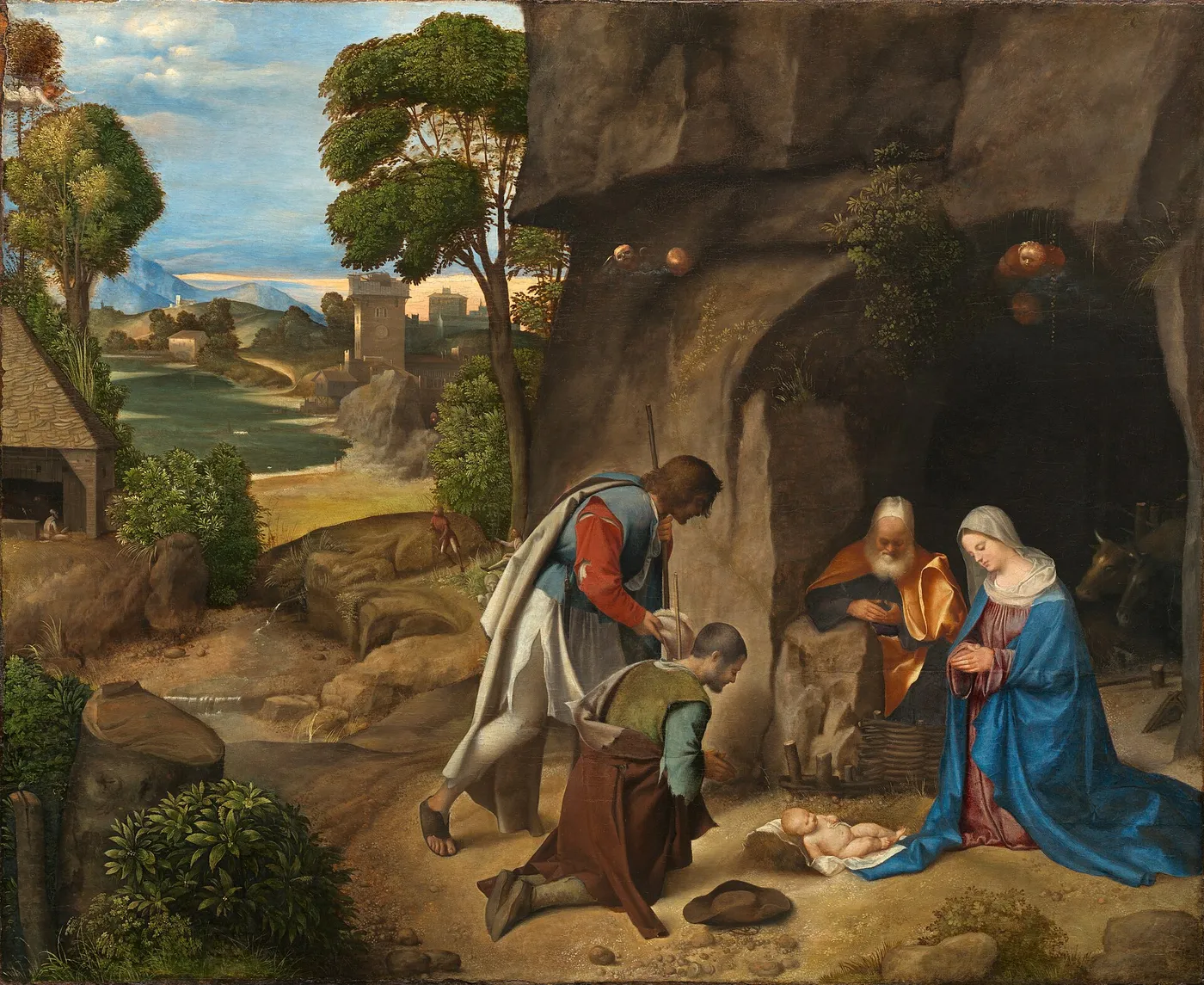
There are no shepherds in Matthew and no wise men in Luke. The nativity scene on the mantelpiece is a merger of two accounts, and it is worth noticing that the merger happened in art and carols rather than in Scripture. Reading them separately, back to back, is one of the few genuinely new things you can do with a story you have heard since childhood.
The prophecies, and what they meant first
Three Old Testament passages do most of the work on Christmas cards, and all three were written to people in trouble long before anyone connected them to a birth in Bethlehem.
Isaiah 9:6 is the one you have heard sung: “For to us a child is born, to us a son is given, and the government will be on his shoulders. And he will be called Wonderful Counselor, Mighty God, Everlasting Father, Prince of Peace.” Isaiah wrote it to a kingdom under military threat. The line before it is about people walking in darkness.
Micah 5:2 names Bethlehem, and names it precisely because it was small and unimportant — the point of the verse is the smallness, which is the point of the whole story.
Isaiah 11, the shoot from the stump of Jesse, is the verse an older Advent custom is named for; a Jesse Tree reading list walks from Genesis to Bethlehem one ornament at a time.
Isaiah 7:14, the Immanuel verse, was first spoken as a sign to a frightened king named Ahaz. Christians read it as pointing forward; that reading is ancient and it is what Matthew does with it explicitly. Knowing its first setting does not weaken it. It puts it where it belongs, which is in the middle of somebody’s bad year.
John 1 is a Christmas passage, and almost nobody reads it as one
The ninth lesson at King’s is John 1:1–14, and it has no manger, no angels, and no shepherds. It has one sentence that does the same job: “The Word became flesh and made his dwelling among us.”
It is placed last for a reason. Luke and Matthew tell you what happened. John tells you what it was. If the story has gone flat from repetition, this is the passage that tends to restore it, because it is the one you have not heard set to a tune.
Reading it aloud without it feeling like homework
The practical failure mode is not choosing the wrong passage. It is a room of people who are half in the kitchen while one person reads for twelve minutes.
Three things that actually help:
- Split the readings. This is why the nine lessons work: nine readers, none of them reading for longer than ninety seconds. At King’s the lessons are deliberately given to different people, from a chorister to the Provost. A family version does the same thing with whoever is in the room.
- Say the length out loud first. “This is about two minutes” settles a room in a way that “let’s read the Christmas story” does not.
- Pick the shortest honest version if the room is small or young. Luke 2:8–14 is 133 words. It has the angel, the good news, and the sky, and it takes about forty seconds.
And if December is the month you had meant to read more and have not, that is not a failure worth carrying into it. Advent is designed as a season of waiting, not a season of catching up.
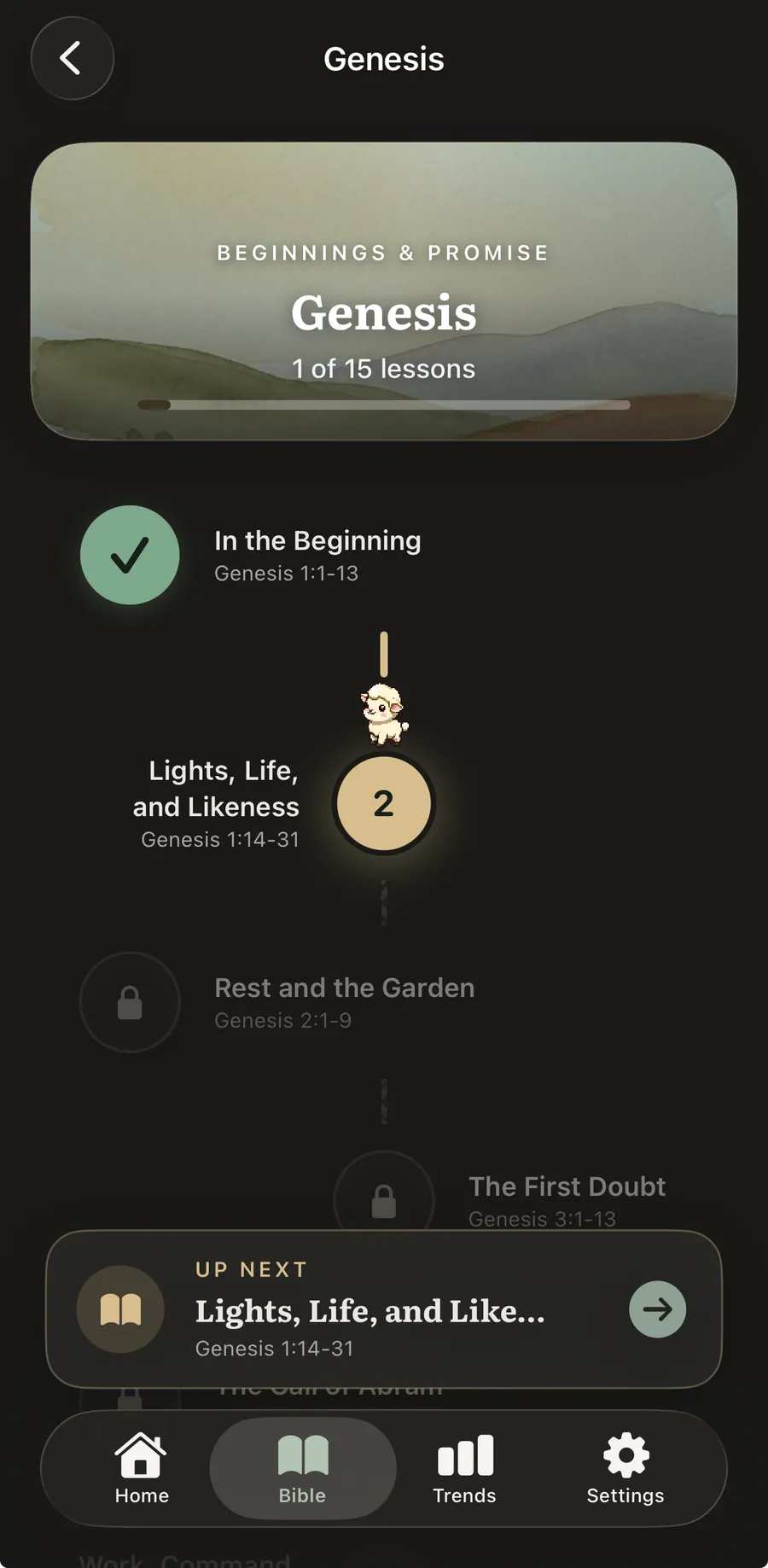
The reason the Christmas readings feel manageable and the rest of the year does not is that somebody already decided the order for Christmas. That is the only real difference. BlessUp does the same thing for the other 364 days: the day’s chapter is chosen before you wake up, it runs about nine minutes — almost exactly the length of the nine lessons — and reading it is what opens the apps on your phone. See how the day’s reading works.
What churches actually read on Christmas Eve
If you would rather follow your church than build your own sequence, the readings are published in advance and are the same across thousands of congregations.
Catholic parishes follow the lectionary, and the Mass during the Night pairs Isaiah 9 with Luke 2:1–14 as the Gospel, published openly by the United States Conference of Catholic Bishops. Anglican, Lutheran, Methodist and many other congregations use the Revised Common Lectionary, which draws on the same passages, and a great many hold some version of the nine lessons service. Orthodox churches, most of which keep the Nativity on a different reckoning of the calendar, read Matthew’s account at the Liturgy.
The differences between traditions here are real and worth knowing rather than smoothing over — the same is true of what actually differs between the Protestant, Catholic, and Orthodox Bibles. If you do not currently have a church and want to be somewhere on Christmas Eve, the BlessUp church finder lists congregations by city.
How many people are actually doing this
More than you would guess from the internet, and fewer than churches would like. In a Pew Research Center survey of 1,503 US adults conducted in November and December 2017, 90% said they celebrate Christmas and 55% celebrate it as a religious holiday. About half, 51%, planned to attend a service on Christmas Eve or Christmas Day. On the story itself, 57% said they believed all four of the elements Pew asked about — the virgin birth, the manger, the angels, and the wise men guided by a star — down from 65% three years earlier.
A story remembered mostly through carols and decorations drifts. Reading the source aloud once a year is a cheap correction.
Verses for a Christmas card
If you are writing cards rather than reading aloud, the trap is that everyone reaches for the same two lines. Some alternatives that are still unmistakably Christmas: Luke 2:14 for the angels’ song; John 1:5 for anyone having a hard year; Isaiah 7:14 for the plain meaning of Immanuel, God with us; and Luke 1:46–49 if you want Mary’s own words rather than a narrator’s.
Match the verse to the person. A friend having a genuinely bad December may not need Wonderful Counselor on a foil background so much as the line about light in the darkness, which was written for exactly that.
If you want to keep going after December 25
The nine lessons stop at John 1:14 because that is where the incarnation lands, not because the story ends. If reading them together goes well, the natural next step is not a bigger Christmas list. It is a plan that does not require you to choose anything — an Advent reading plan gets you to Christmas, and the real arithmetic of reading the Bible in a year tells you what the rest of it costs.
To carry the season itself further, twelve days of Christmas Bible readings give one chapter a day through January 5.
Frequently asked questions
What is the main Bible verse for Christmas?
Luke 2:11 is the single line the season turns on: “Today in the town of David a Savior has been born to you; he is the Messiah, the Lord.” If you want the whole scene rather than one verse, read Luke 2:1–20, which is 387 words and takes under two minutes to read.
Where is the Christmas story in the Bible?
It is spread across four places rather than one. Luke 1–2 gives the annunciation, the birth and the shepherds. Matthew 1–2 gives Joseph, the wise men and Herod. Isaiah and Micah carry the prophecies quoted every December. John 1:1–14 explains what the birth meant. Mark has no birth narrative at all.
How long does it take to read the Christmas story aloud?
The nine traditional readings total about 1,950 words. Read silently at 220 words a minute that is roughly nine minutes; read aloud at a normal speaking pace of about 140 words a minute it is closer to fourteen. Luke 2:1–20 on its own is about three minutes aloud, and Luke 2:8–14 is about forty seconds.
What are the nine lessons and carols readings?
Genesis 3:8–19, Genesis 22:15–19, Isaiah 9:2 and 6–7, Isaiah 11:1–9, Luke 1:26–38, Luke 2:1–7, Luke 2:8–20, Matthew 2:1–12, and John 1:1–14. King’s College, Cambridge has read them in that order since 1918, adapting a service written for Truro Cathedral in 1880.
Which Bible verse is best for a Christmas card?
Luke 2:14 for the angels’ song, John 1:5 for someone having a hard year, Isaiah 7:14 for the plain meaning of Immanuel, and Luke 1:46–49 if you would rather use Mary’s own words. Match the verse to the person rather than picking the most decorative line.
Your day starts in the Word, not the feed. BlessUp is free to download.
No guilt. Ever. Grace is built in. Funded by readers, never by ads.