How to Read Romans
By Dom · · 11 min read
Chapter 1 goes fine. Paul introduces himself, says he has been longing to visit, and announces that he is not ashamed of the gospel. Then somewhere in chapter 2 or 3 the ground shifts. He is arguing about the law, circumcision and whether being Jewish is an advantage, and every paragraph assumes you know the question.
That is where many first reads of Romans end, and it has little to do with how hard you tried. Romans is a letter to real people in the middle of a real disagreement, and its argument runs for sixteen chapters. Know where it is going before you start and it becomes one of the most rewarding things you will read.
Key takeaways
- Romans is Paul’s longest letter, written to believers in Rome to announce a visit and win their support for a mission to Spain, and it sets out the gospel he preaches along the way.
- The argument runs in five movements: the greeting and thesis (1:1–17), everyone needs rescue (1:18–4:25), new life (5–8), what about Israel (9–11), and life together (12–16).
- Five words carry most of the weight: righteousness, justification, faith, law and grace.
- At a chapter a day, Romans takes sixteen days. The stretches where readers most often stall are chapters 2–4, 7 and 9–11.
- Protestant, Catholic and Orthodox readers explain parts of Romans differently. Read the text first, then a note from your own tradition, and take doctrine questions to your pastor.
Why Paul wrote Romans
Luther Seminary’s Enter the Bible summary of Romans, by Arland J. Hultgren, puts the occasion plainly. Paul writes the longest of his letters to followers of Jesus in Rome, announcing that he plans to visit, to be encouraged by them, and to be sent on by them to Spain. To win that support, he sets out the gospel he preaches and spells out what it means for Christian life. The same summary dates the letter to somewhere between 55 and 58 CE, written from Corinth and carried to Rome by Phoebe, a deacon of the church at nearby Cenchreae.
There was also trouble in the room. BibleProject’s guide to Romans describes a church of Jewish and non-Jewish believers that had been pulled apart. When the emperor Claudius expelled the Jews from Rome, Jewish followers of Jesus left with them. When they returned, they found a church that had become non-Jewish in its customs, and by Paul’s day it was divided over the Sabbath, kosher food and circumcision. Paul wanted it united.
Scholars read the setting in more than one way. In his Open Yale Courses lecture “Paul as Jewish Theologian”, Yale’s Dale Martin reads Romans as Paul carefully nuancing the position on the Jewish law he had taken in Galatians. Martin suggests Paul was answering the charge of throwing the law out, and treading carefully so the gift he was carrying from the Gentile churches to Jerusalem would be received in unity. That is one historical reading, not the verdict of the church.
Either way, the practical point is the same: Romans is a letter to real people, not a textbook of doctrine, and it reads best as one.
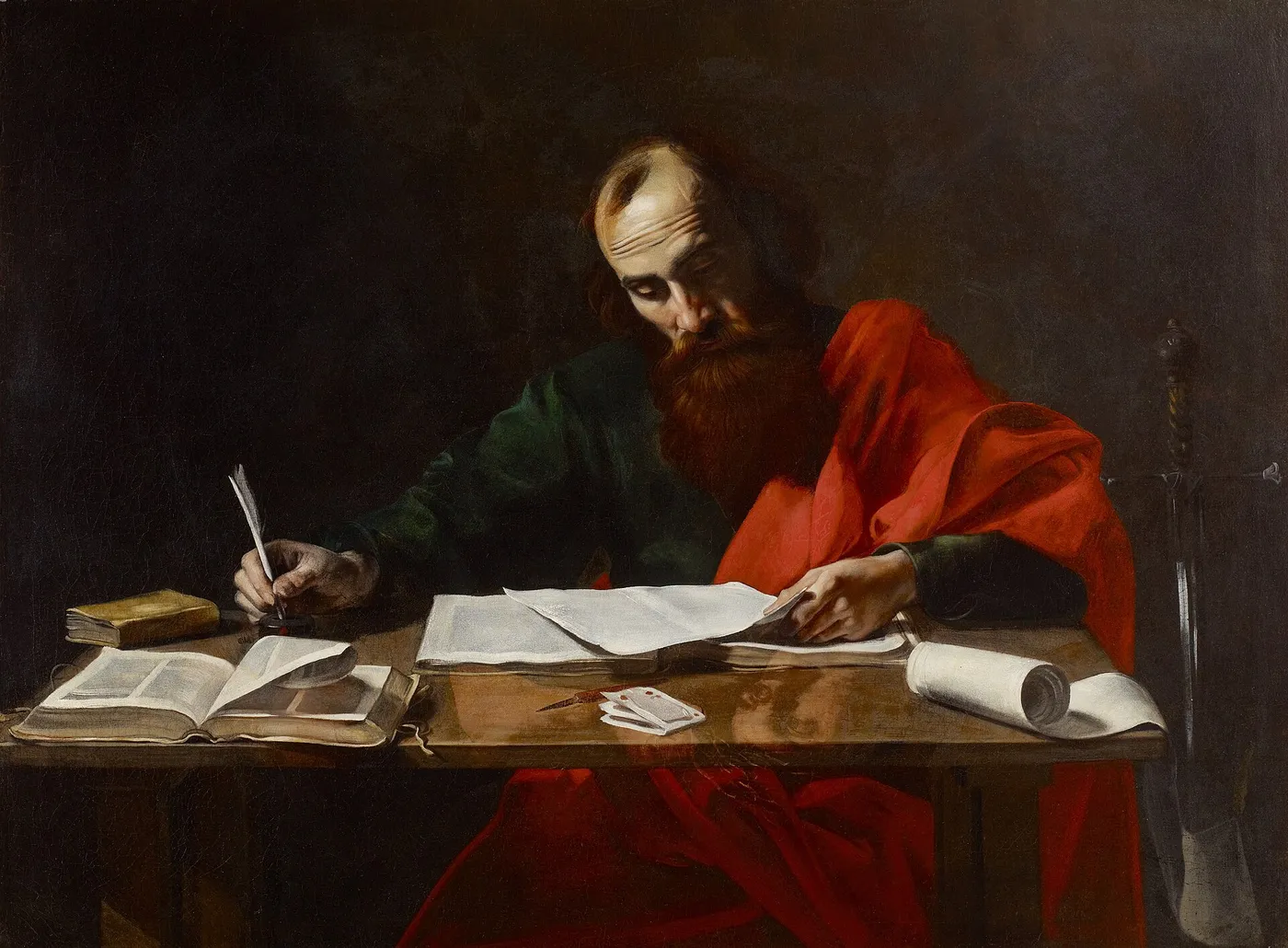

The argument in five movements
BibleProject divides the letter into four sections: chapters 1–4, 5–8, 9–11 and 12–16. We split the opening seventeen verses out, because they hold the thesis, and a reader who keeps it in mind can follow almost anything after it.
- The greeting and the thesis (1:1–17). Paul introduces himself and states what the whole letter will argue. In the NIV, Romans 1:16–17 reads: “For I am not ashamed of the gospel, because it is the power of God that brings salvation to everyone who believes: first to the Jew, then to the Gentile. For in the gospel the righteousness of God is revealed—a righteousness that is by faith from first to last, just as it is written: ‘The righteous will live by faith.’”
- Everyone needs rescue, and God provides it (1:18–4:25). Paul argues that Gentiles and Jews alike have fallen short, and that God has acted through Jesus. Chapter 4 turns to Abraham, who trusted God’s promise and was counted righteous before the law of Moses was ever given.
- A new kind of life (5–8). Adam and Christ are set side by side, baptism is described as dying and rising with Christ, chapter 7 wrestles with what the law could and could not do, and chapter 8 turns to life in the Spirit. It opens, “Therefore, there is now no condemnation for those who are in Christ Jesus” (Romans 8:1, NIV).
- What about Israel? (9–11). Paul writes of his anguish for fellow Israelites who have not received Jesus as Messiah, and ends with the image of an olive tree: branches broken off, wild branches grafted in, and a God who does not give up on His people.
- Life together (12–16). The argument lands in practice: love and humility in the church, life under Roman government, and in chapters 14–15, how believers who disagree about food and holy days should treat one another. Chapter 16 commends Phoebe and greets some 26 people by name.
Chapter 8 ends on “neither death nor life, neither angels nor demons, neither the present nor the future, nor any powers, neither height nor depth, nor anything else in all creation, will be able to separate us from the love of God that is in Christ Jesus our Lord” (Romans 8:38–39, NIV). They land far harder after chapters 1 to 7.
Five words that unlock the letter
Most first-read confusion comes from a handful of words Paul uses with great care. A working sense of them beforehand is worth more than any number of notes afterward.
- Righteousness. BibleProject describes it as a word from the Hebrew Scriptures for God’s own character: God acts in a way that is just and right, and is faithful to what He has promised. When Paul says the gospel reveals “the righteousness of God,” start there.
- Justification. BibleProject glosses it as, literally, “to declare righteous.” In Romans 4, Abraham is the model: he trusted God’s promise, and God counted him righteous. What justification involves beyond that is where traditions explain things in their own ways, which is why the next section exists.
- Faith. Trust in God and in His promise, again with Abraham as the example. When you see “faith” in Romans, try reading “trust” and see whether the sentence opens up.
- Law. Usually the Torah, the commands God gave Israel through Moses, including the Sabbath, food laws and circumcision. Paul calls the law good. His question is what it could and could not do, and what it means for Gentiles, a word that simply means anyone who is not Jewish.
- Grace. Enter the Bible’s glossary defines it as the unmerited gift of God’s love and acceptance. Paul keeps coming back to it as the reason any of the rest is possible.
When a paragraph loses you, ask which of the five words it is about. For a fuller method of working through a hard passage, how to study the Bible walks through observation, interpretation and application step by step.
Where readers disagree, and why that is not a reason to stop
Outside the four Gospels, Enter the Bible calls Romans unsurpassed in its impact on later church history. It played a part in Augustine’s conversion. Martin Luther’s rediscovery of grace, justification and faith in Romans sparked the Reformation. the Methodist movement traces its beginnings to John Wesley reading Luther’s Preface to Romans, and Karl Barth’s 1919 commentary on Romans changed twentieth-century theology.
So it is read in more than one way. Protestant, Catholic and Orthodox Christians all treasure Romans, and explain parts of it, especially justification in chapters 3–5 and Israel in chapters 9–11, from within their own traditions. We are app builders, not theologians, and we will not settle those questions for you here. Why commentary varies by tradition explains where those differences start, and your pastor or priest is the right person for the rest.
Disagreement is not a sign that Romans is too hard for you. It is a sign that people have read it closely for two thousand years. Read the chapter first, form your own impression, then read a note from your own tradition.
Most readers who give up on Romans do not give up because they disagree with it. They give up somewhere in chapter 3, not sure what they are meant to be following or whose explanation to trust. BlessUp gives Romans eight study lessons, and every one carries four separately written commentaries, Non-Denominational, Protestant, Catholic and Orthodox, so you read the passage in your own tradition’s voice. Read the day’s chapter and the apps you have shielded open, and tomorrow’s reading is already waiting. BlessUp is on the App Store
A sixteen-day plan, with the hard stretches marked
Sixteen chapters, one a day. This turns the outline into mornings and marks the three stretches where, in our experience, first-time readers most often put it down.
| Day | Movement | The question Paul is answering | Pace note |
|---|---|---|---|
| 1 | Greeting and thesis | Who is writing, and what is the gospel he preaches? | Reread 1:16–17 before you close it |
| 2 | Everyone needs rescue | Is anyone good enough on their own? | Hard stretch begins |
| 3 | Everyone needs rescue | Does having the law make Israel different? How does God put people right? | Hard stretch |
| 4 | Everyone needs rescue | What does Abraham show about faith? | Hard stretch ends |
| 5 | New life | What does Jesus undo that Adam began? | A good day to read slowly |
| 6 | New life | What does baptism into Christ mean for the old life? | Baptism is the key image |
| 7 | New life | If the law is good, why could it not fix the heart? | Hard stretch, on its own |
| 8 | New life | What does life in the Spirit look like? | The high point; do not rush it |
| 9 | What about Israel? | Has God’s word to Israel failed? | Hard stretch begins |
| 10 | What about Israel? | Why have so many not believed? | Hard stretch |
| 11 | What about Israel? | Has God given up on His people? | Hard stretch ends; the olive tree |
| 12 | Life together | What does a changed life look like day to day? | Short, practical, quotable |
| 13 | Life together | How should believers live under the government, and toward everyone? | Short |
| 14 | Life together | What do we do when believers disagree about food and holy days? | Read with the Roman church in mind |
| 15 | Life together | How do Jew and Gentile welcome one another, and where is Paul going next? | Spain appears here |
| 16 | Life together | Who is Paul greeting, and who carries the letter? | Read the names; they are the church |
Three habits get most readers through the hard stretches:
- Keep going when a verse loses you. The argument is cumulative; chapter 3 often clears up in chapter 4, when Abraham makes the point as a story.
- Read chapters 9–11 as one piece. Stopping mid-way leaves you the hardest part and none of the resolution.
- Treat day 8 as a reward, not a finish line. Chapters 12–16 turn the argument into a way of living.
If you would rather not start with Romans at all, that is a reasonable choice. Our guide to where to start reading the Bible suggests a Gospel first and a shorter letter such as Philippians before a long one, and reading the Gospel of John first gives Romans a story to stand on. Our FAQ covers which translations the app ships and how the denomination setting works.
Frequently asked questions
What is the main message of the book of Romans?
Luther Seminary's Enter the Bible sums it up as God's saving work in Christ for Jew and Gentile alike, both of whom fall short of doing God's will yet receive grace and mercy from God. Paul states the thesis in Romans 1:16-17: the gospel is the power of God that brings salvation to everyone who believes.
Why did Paul write the letter to the Romans?
Paul wrote to announce a planned visit to Rome and to win the church's support for a mission further west to Spain, setting out the gospel he preaches along the way. BibleProject adds that the Roman church was divided between Jewish and non-Jewish believers, and that Paul wanted it united.
How long does it take to read Romans?
Romans has sixteen chapters, so a chapter a day takes sixteen days, and two a day takes eight. Chapters 2 to 4, 7 and 9 to 11 are the stretches where readers most often stall, so give those days a little more time.
Is Romans a good book for a new Christian to read?
It is rewarding, but it is dense. Many new readers do better starting with a Gospel such as John or Mark and a shorter letter such as Philippians, then coming to Romans with a map of its five movements. For questions of doctrine, talk with your pastor or priest.
Small daily readings, cover to cover. That is the whole plan.
No guilt. Ever. Grace is built in. Funded by readers, never by ads.