Bible Verses About Distraction and Attention
By Dom · · 13 min read
You cannot hold your attention on anything, including the thing you most want to attend to, and you have a suspicion Scripture might have something to say about it. What you find when you search is a flat list of twenty verses with no context, several of which are not about distraction at all.
The Bible is more precise here than English suggests. There is a word for being pulled several ways at once, the New Testament uses it exactly once, and it uses the negation of that word exactly once as well.
Key takeaways
- The Greek word is perispao — “to drag all around” — and it appears exactly once in the New Testament, of Martha in Luke 10:40.
- Its negation appears exactly once too. Aperispastōs, “without distraction”, is the word behind “undivided” in 1 Corinthians 7:35.
- Martha is not being rebuked for being busy, on the reading we and two Luther Seminary commentaries take: Jesus does not admonish the hospitality Luke praises elsewhere. He names her worry.
- None of these passages is about phones, which is precisely why they reach them: they describe a divided self that predates every device.
- Several verses commonly listed here are about something else — Hebrews 12:1–2 is about endurance, Colossians 3:23 sits in a household code, 1 John 5:21 concerns literal idolatry.
What the Bible actually calls distraction
Search this phrase and you will be handed twenty verses in a list, several of which are not about distraction at all. That is worth fixing, because the Bible is more precise on this than English lets on.
The Greek word behind the most famous instance is perispao. Strong’s G4049 glosses it as “to drag all around”, and figuratively to be driven about mentally, to be over-occupied or too busy about a thing. Not unfocused. Not lazy. Dragged around — pulled in several directions at once by things that each have a real claim on you.
That is a better description of a Tuesday than “distracted” is, and it carries no implication that the things pulling are worthless — most of what fragments an ordinary day is work, family, and messages from people who need something.
The volume is not imagined either, though the clearest measurement is of teenagers rather than adults: Common Sense Media’s 2023 study of a week of real smartphone use found that over half of the teens in its sample received 237 or more notifications a day. Adults are a different population and that figure should not be stretched to cover them. But it does make “dragged all around” a literal description of a device rather than a metaphor.
Martha, and the only time the New Testament uses this word
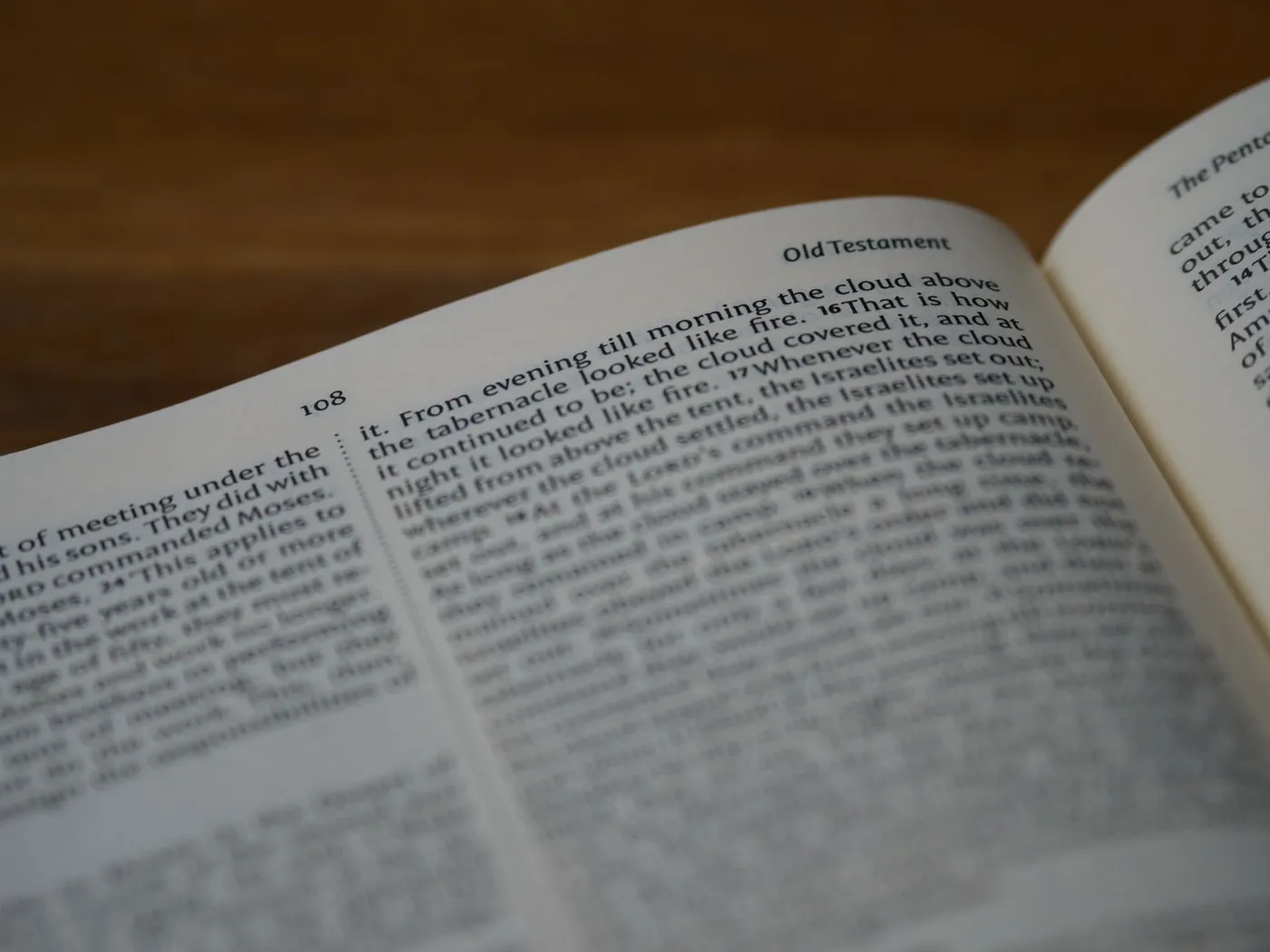
Here is the part that no list page mentions. Perispao occurs exactly once in the New Testament. One verse, in the whole of it: Luke 10:40, where Martha is “distracted by all the preparations that had to be made” (NIV).
The scene is short and frequently misread. Martha welcomes Jesus into her home, her sister Mary sits at His feet and listens, and Martha — dragged around by the preparations — asks Jesus to intervene. His answer is the line everybody knows: “Martha, Martha, you are worried and upset about many things, but few things are needed—or indeed only one” (NIV).
The common reading turns this into a rebuke of busyness. That is not how the passage reads to us, and it is not how two Luther Seminary commentaries read it either — though it is a reading, and worth holding as a disagreement rather than a refutation. Commenting on the passage for Working Preacher, Elisabeth Johnson of Luther Seminary notes that periespato “has the connotation of being pulled or dragged in different directions,” and that the problem with Martha is not her serving but her worry and distraction, which leave no room for attention to the guest. Luther Seminary’s Enter the Bible makes the same distinction: Jesus does not admonish Martha for the hospitality she offers — elsewhere in Luke that kind of service is strongly praised — He names her anxiety.
So the passage is not against work or hospitality. It is about what being pulled several ways costs: the guest in the room stops being attended to. Anyone who has answered a message mid-conversation knows that shape exactly.
Undivided: the same word, negated, once
Now the other half, and it is the thing that makes this pair worth writing about at all.
There is a Greek adverb, aperispastōs, built from the negative particle and a derivative of the same root as perispao. Strong’s G563 renders it “without distraction”. Literally: not-dragged-around. And it too occurs exactly once in the New Testament, at 1 Corinthians 7:35, where Paul says he is writing “not to restrict you, but that you may live in a right way in undivided devotion to the Lord” (NIV).
| Greek | Strong’s | Literally | Where it appears | Rendered as |
|---|---|---|---|---|
| perispao | G4049 | To drag all around; to be over-occupied about a thing | Luke 10:40 — once in the New Testament | “distracted” (NIV); “cumbered” (KJV) |
| aperispastōs | G563 | The same word negated: not dragged around | 1 Corinthians 7:35 — once in the New Testament | “undivided” in “undivided devotion” (NIV); “without distraction” (KJV) |
Two single occurrences, one negating the other. Martha is the condition; Paul’s hope for his readers is its opposite, and he is careful to say he is not laying down a restriction — the goal is not a rule about attention but a life that is not being torn.
Notice what neither verse is about. Not phones, obviously. Not productivity, not focus techniques, not screen time. And that is exactly why they still reach a phone: they name a condition of the divided self that predates every device, so nothing about the technology has to be argued.
Verses for the moment you reach for the phone
A verse admired in a list is not reachable at the moment it is needed. So it is worth attaching passages to the moments attention actually breaks rather than to book order.
| The moment | The passage | What it actually names |
|---|---|---|
| The morning reach | Luke 10:41–42 | Few things are needed — the cost of being dragged around is the guest stopping being attended to |
| The morning reach | Psalm 119:37 | A prayer about where the eyes go, asked of God rather than achieved |
| The mid-task pull | Proverbs 4:25–27 | Fixed gaze and a considered path — direction, not concentration |
| The evening scroll | 1 Corinthians 7:35 | A life not torn between competing legitimate claims |
| The evening scroll | Luke 21:34 | Hearts weighed down by the anxieties of life, arriving gradually |
The morning reach is the Martha moment in miniature — not because the feed is trivial, but because something in the room has stopped being attended to. “Few things are needed — or indeed only one” does real work at 6:40am, and it is not a scold. Jesus does not tell Martha to stop cooking; He tells her what she is losing while she is dragged around.
Alongside it, Psalm 119:37 is a prayer rather than an instruction, which makes it easier to pray honestly on a bad morning: “Turn my eyes away from worthless things; preserve my life according to your word” (NIV). It is about looking, not about screens. It asks for something to be done to the one praying rather than promising something they will achieve, which is the right posture for a moment when your judgement is not yet online.
The difficulty with a verse for the moment attention splits is that the moment arrives before the verse does — your thumb is already moving. The reason we built BlessUp around a shield is that it puts the reading at exactly that point: the apps you choose stay shut until the day’s chapter is read, so the passage arrives at the moment it is about instead of hours later. Your phone starts opening the Bible instead of closing it. See how the reading gate works.
The mid-task pull
Between the morning and the evening sits the commonest version of all: you are doing something, the phone is face-up, and a notification takes you elsewhere for four minutes.
Proverbs 4:25–27 is usually listed for this query, and it half fits, which is worth saying rather than glossing. “Let your eyes look straight ahead; fix your gaze directly before you” (NIV) is about a fixed gaze, and the surrounding verses are about the path your feet take and not turning to the right or the left. It is moral direction rather than attention management. But the image is exact, and the reason it lands is not that Solomon anticipated notifications; it is that a divided gaze was already the older problem.
Verses for the evening scroll
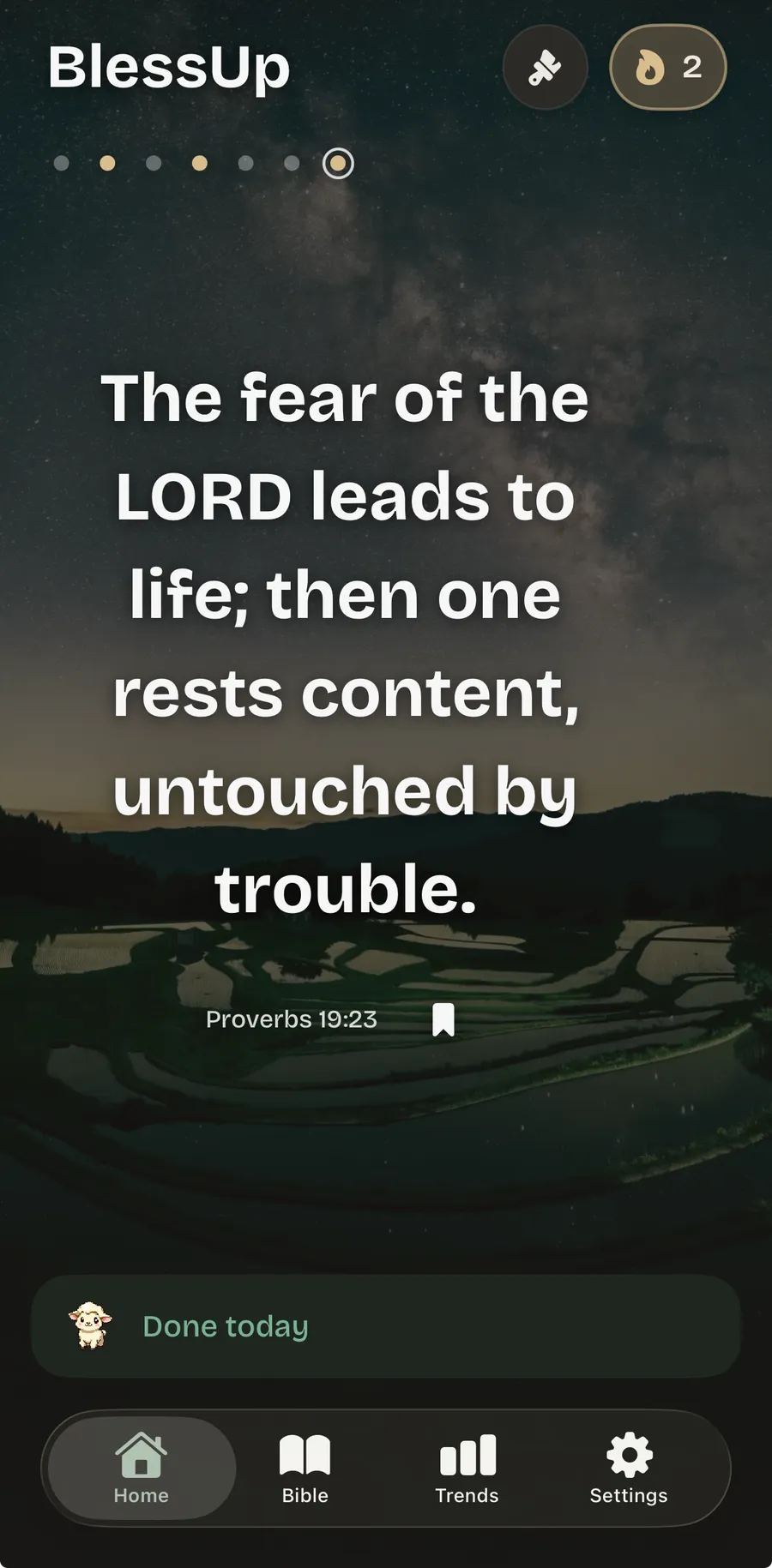
The evening version is different in kind. Nothing is being neglected exactly — the work is done, the house is quiet — and an hour goes anyway, and it does not feel like rest afterwards.
1 Corinthians 7:35 is the passage for this, and read in the evening it is less an instruction to close an app than a question about what has quietly acquired a claim on you. Paul is not describing something neglected; he is describing a life pulled apart by claims that are each legitimate.
Luke 21:34 catches the other half of the evening, which is how gradual it is: “Be careful, or your hearts will be weighed down with carousing, drunkenness and the anxieties of life” (NIV). The warning is not against a decision but against a weight that accumulates while you are not deciding anything. An hour that did not feel like rest is a small instance of exactly that.
The second half of Psalm 119:37 belongs here too. “Preserve my life according to your word” is the positive half of a verse usually quoted only for its first clause — the prayer is not merely to look away from something but to be kept alive by something else. That is the same substitution logic we make practically in how to stop doomscrolling, and at greater depth in screen time as a spiritual problem.
Both point the same way, and neither points at a screen. If the evening is when you would rather read, the question that usually stops people is which book — where to start reading the Bible answers it, and our frequently asked questions cover how a daily portion is sized.
Passages that get listed here but are not about distraction
This section is the reason the post exists. Search results for this phrase routinely include verses that are doing something else entirely, and quoting them at a struggling reader is not harmless — it teaches that Scripture means whatever the topic requires.
Three that turn up constantly:
- Hebrews 12:1–2, “fixing our eyes on Jesus”, is about endurance, not attention span. The surrounding sentence is about running a race with perseverance, surrounded by a cloud of witnesses, and the example given is Jesus enduring the cross. The thing to be thrown off is “everything that hinders and the sin that so easily entangles” — a notification is not what that phrase was reaching for.
- Colossians 3:23, “work at it with all your heart”, sits inside a household code that begins “Slaves, obey your earthly masters in everything.” It is about the integrity of work done without supervision. Lifting it out to mean “concentrate harder” loses both its addressees and its point.
- 1 John 5:21, “keep yourselves from idols”, is the closing line of a letter preoccupied with false teaching about who Jesus is. Whether its idols are literal images or the secessionists’ false conception of God is genuinely disputed — and on either reading it is not making an observation about attention. Phones can certainly become idols; borrowing this verse’s authority to say so is still a shortcut.
None of this means those verses have nothing to say to a distracted person. It means the honest route is to read them for what they are about and let the application be yours, rather than pretending the text was aimed at your phone. The two verses that are about being pulled in several directions are enough, and they are stronger for being genuine.
Which is the smaller and more useful claim: Scripture does not treat divided attention as a modern failure. It has a precise word for it, uses it once, negates it once, and the two occurrences sit at either end of a question that was already old when the letters were written. If what you want is the anxious version of this, the passages on anxiety, read honestly covers the neighbouring ground.
Frequently asked questions
What does the Bible say about distraction?
It has a specific word for it. The Greek perispao means to be dragged all around or over-occupied about a thing, and it appears once in the New Testament, describing Martha in Luke 10:40. Its negation appears once as well, in 1 Corinthians 7:35. Scripture treats divided attention as the condition of being pulled by competing claims rather than as laziness.
Is there a Bible verse about technology or phones?
No, and that is the more useful answer. No passage is about phones, because none of them could be. What Scripture addresses is the underlying condition of being pulled in several directions at once, which is why those passages reach a device they never anticipated. A verse claimed to be about technology is usually a verse being made to say something it does not.
Which Bible verses are actually about distraction, and which are not?
Luke 10:40-42, 1 Corinthians 7:35 and Psalm 119:37 address divided attention directly, and Proverbs 4:25-27 and Luke 21:34 address the neighbouring ground of fixed gaze and accumulated weight. Three that are commonly listed do not: Hebrews 12:1-2 is about endurance under suffering, Colossians 3:23 sits inside a household code about work done unsupervised, and 1 John 5:21 closes a letter about false teaching.
Was Jesus rebuking Martha for being busy?
Two Luther Seminary commentaries say not, and that is the reading this page takes: Jesus does not admonish the hospitality Luke praises elsewhere, and what He names is her worry. It is a reading rather than a settled matter, and others take the passage as a caution about busyness itself. What is not in dispute is the word Luke chose, which means being pulled in several directions at once.
Being pulled in every direction is old. So is the word for coming back.
No guilt. Ever. Grace is built in. Funded by readers, never by ads.