Bible Verses About Patience: Two Different Words
By Dom · · 12 min read
Somebody sends you a verse about patience. You are eleven months into waiting for a diagnosis, or a job, or a person to come home, and the verse arrives with a soft-focus photograph attached. You read it, you mean to be grateful, and something in you does not land.
Often that is not hardness of heart; the verse is answering a different question from the one you are asking. The New Testament uses two words where English Bibles nearly always print one, and half the verses people send about waiting were written about something else.
Key takeaways
- Two Greek words sit behind the English word “patience.” Makrothumia is patience toward people; hupomone is endurance under circumstances.
- The endurance word is far more common. Hupomone appears 32 times in 31 New Testament verses, and the King James renders it “patience” 29 of those times.
- The fruit of the Spirit in Galatians 5:22 is the other word. Makrothumia occurs 14 times and is rendered “longsuffering” in 12 of them. It is about not retaliating against people, not about your timeline.
- Paul uses both in a single verse. Colossians 1:11 asks for hupomone and makrothumia together, which is good evidence he did not treat them as the same thing.
- The Old Testament word is different again. The Hebrew qavah behind “wait on the Lord” occurs 49 times; its root sense is binding or twisting together, and the lexicon’s figurative sense is to expect.
Why the verse you were sent may not fit
Our word “patience” covers not snapping at a slow cashier, staying at a bedside for a year, and believing something unseen will arrive. Greek splits those, and every list on page one flattens them back together. Walk the most common mismatch through. Someone waiting on that biopsy is sent Galatians 5:22, the fruit of the Spirit, with patience in the list. The word there is makrothumia: restraint toward people who provoke you. The person reads it as an instruction to feel calm about the result, does not, and adds that to the pile. The verse never asked for calm about a result. Hand the same person Romans 8:25 and the fit is exact: hoping for what you do not yet have, and waiting anyway. Same English word, opposite fit.
Two words, and what each one carries
The distinction is old and well documented. The International Standard Bible Encyclopedia (1915), quoting Richard Trench’s Synonyms of the New Testament, states it directly in its entry on longsuffering: the difference between hupomone and makrothumia is that the latter expresses patience in respect to persons, and the former in respect to things.
Marvin Vincent’s Word Studies adds the shape of it. Makrothumia is built from makros, long, and thumos, passion: a long-protracted restraint of the soul from yielding to passion, especially the passion of anger. It is the opposite of a short fuse. Hupomone is literally a remaining-under: staying beneath a weight without being crushed by it. Liddell and Scott’s lexicon agrees: hupomone is remaining behind, endurance; makrothumia is long-suffering, patience, forbearance.
The counts show how much of this the English hides. Hupomone occurs 32 times across 31 verses, and the King James translates it “patience” in 29 of them. Makrothumia occurs 14 times, rendered “longsuffering” 12 times and “patience” twice. So when a King James Bible says patience, the odds are roughly nine in ten that the word underneath is the endurance one. The NIV goes the other way, printing hupomone mostly as perseverance and makrothumia as patience or forbearance; the table quotes the NIV.
One honest caveat, which the encyclopedia raises itself: the line is a strong tendency, not a law. The same entry notes makrothumia used of things rather than people in James 5:7. Language is not a filing system, but the tendency is real enough to change how several familiar verses read.
The passages, sorted by which word they use
| Passage | Greek word | What it says (NIV) | What it is addressing |
|---|---|---|---|
| Galatians 5:22 | makrothumia | “love, joy, peace, forbearance, kindness, goodness, faithfulness, gentleness and self-control” | People who provoke you |
| Ephesians 4:2 | makrothumia | “Be completely humble and gentle; be patient, bearing with one another in love.” | Bearing with one another |
| Colossians 3:12 | makrothumia | “clothe yourselves with compassion, kindness, humility, gentleness and patience” | People inside the church |
| James 5:7 | makrothumia (verb) | “Be patient, then, brothers and sisters, until the Lord’s coming. See how the farmer waits for the land to yield its valuable crop” | Waiting for the Lord’s coming |
| Romans 5:3–4 | hupomone | “suffering produces perseverance; perseverance, character; and character, hope” | Suffering |
| Romans 8:25 | hupomone | “But if we hope for what we do not yet have, we wait for it patiently.” | Hoping for what you cannot see |
| Romans 12:12 | hupomone (verb) | “Be joyful in hope, patient in affliction, faithful in prayer.” | Affliction |
| James 1:3–4 | hupomone | “the testing of your faith produces perseverance. Let perseverance finish its work” | Trials that test faith |
| Hebrews 12:1 | hupomone | “let us run with perseverance the race marked out for us” | A race longer than you expected |
| Colossians 1:11 | both, side by side | “so that you may have great endurance and patience” | Both at once, with joy |
Galatians 6:9 (NIV), “at the proper time we will reap a harvest if we do not give up,” is missing from the table because it uses neither word; it runs on the farmer’s logic of James 5 instead.
That last row is the strongest evidence that the distinction is real: Paul asks for hupomone and makrothumia in the same breath, and a writer does not stack two words in one clause if he thinks they mean the same thing.
Galatians 5:22 is about people
This is the verse at the top of nearly every patience list, and the one most often applied to circumstances. The commentators are unusually united that it is not. Benson glosses longsuffering as patience in bearing with the infirmities, and faults, and even injuries of others, and the Cambridge Bible calls it patience sustained under injuries and provocation.
That is a demanding thing to be told when you were hoping for comfort about a delay. It is also, for many people in a long wait, closer to the actual daily problem. The wait itself is not usually the sharpest pain; the sharpest pain is the relative with the opinion, the colleague who asks again, the friend who has stopped asking. Galatians 5:22 has a great deal to say to that, and it says it as a fruit that grows rather than a discipline you manufacture.
James and the farmer, which is the exception
James 5:7 is where the word for patience-with-people gets pointed at a circumstance, and the image James picks is a farmer. The agricultural detail is the whole argument.
In the climate James was writing to, the crop depended on two separate rainy seasons. Barnes’ Notes has the early rains beginning in late October or early November, and Vincent has the latter rains, much lighter, falling in March and April. The seed goes in before the first; the grain fills out at the second. Between them the farmer has nothing to do about it at all.
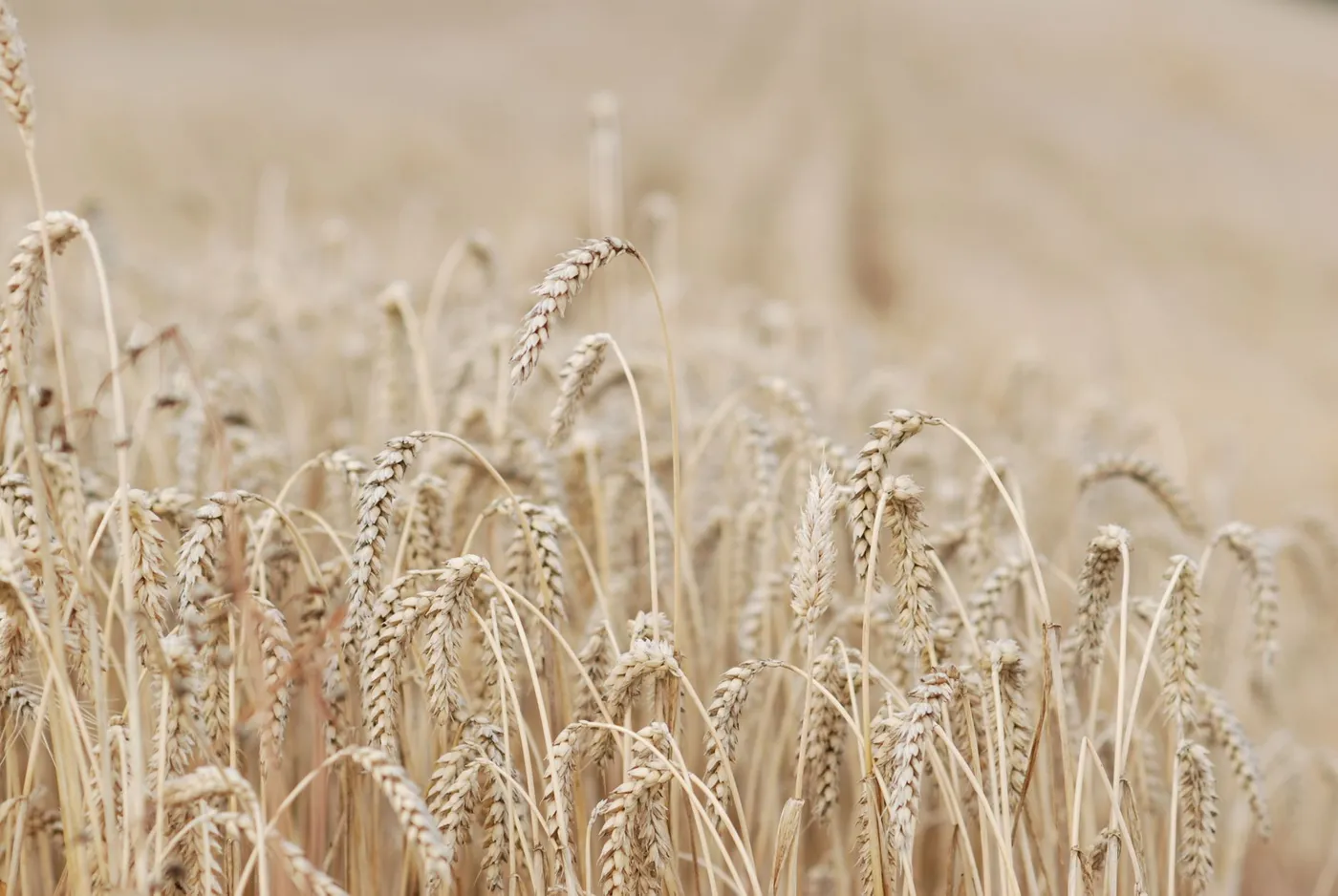
Notice what the image does not promise: not that the wait will be short, and not that it will be comfortable. It says the timing belongs to the rains. The farmer is not passive, there is work in the field throughout, but the part he wants most is the part he cannot accelerate.
Long waits are hard on daily habits, and Scripture reading is usually the first thing to go, precisely when it would help most. The thing that helps is not a bigger commitment but a smaller and more automatic one: BlessUp puts the day’s chapter in front of you already chosen, about nine minutes, and shields the apps you pick until you have read it. Miss a day and a grace day covers it. See how a day of it works.
Romans 8:25 and waiting for what you cannot see
If James gives the image, Paul gives the definition. “But if we hope for what we do not yet have, we wait for it patiently” (Romans 8:25, NIV). The word is hupomone, defined by what is absent: you cannot see the thing yet. Patience here is not serenity about the outcome; it is what remains once certainty has been removed.
James 1:3–4 works the same way: hupomone is produced by testing and left to finish its work, a process with a duration, not a promise that the trial is nearly over.
This is why so many patience lists feel thin: they quote the verses as reassurance that the wait ends soon, when the verses tell you what to do inside a wait of unknown length, the same honesty you find when the anxiety passages are read with their context left in.
The Old Testament word is different again
Isaiah 40:31 and Psalm 27:14 are Hebrew, so neither Greek word applies. The verb in both is qavah, which the Blue Letter Bible records as occurring 49 times across 45 verses, rendered “wait” 29 times and “look” 13. Its root sense is to bind together, perhaps by twisting, and the lexicon gives the figurative sense as to expect, which is what “hope” translates.
The root is an illustration, not the verse’s meaning, but a useful one: a cord under tension is not relaxed. And “Those who hope in the Lord will renew their strength” (Isaiah 40:31, NIV) was written to exiles who had concluded God had stopped paying attention, not to people at peace with the delay. If you have read that verse as a rebuke for not feeling calm, the context is on your side.
The Old Testament also has a phrase that maps onto makrothumia almost exactly: ’erek ’appayim, literally long of nostrils, printed “slow to anger.” It is first said of God, and then asked of people.
| Passage | Hebrew | What it says (NIV) | What it is addressing |
|---|---|---|---|
| Exodus 34:6 | ’erek ’appayim | “the compassionate and gracious God, slow to anger, abounding in love and faithfulness” | God’s own patience with people |
| Proverbs 14:29 | ’erek ’appayim | “Whoever is patient has great understanding, but one who is quick-tempered displays folly.” | A short fuse |
| Proverbs 15:18 | ’erek ’appayim | “A hot-tempered person stirs up conflict, but the one who is patient calms a quarrel.” | A quarrel |
So the Proverbs verses, which appear on every patience list, are about temper rather than time; they belong with Galatians 5:22, not with Romans 8:25. Psalm 37:7 (“wait patiently for him; do not fret when people succeed in their ways”) and Ecclesiastes 7:8 (“patience is better than pride”) use other words again and belong with the waiting group.
How the major English translations differ and how four traditions read one passage are both worth knowing before you conclude a passage has nothing for you.

Using these while you are still in it
The phone you hold while you wait trains the opposite of hupomone. A feed is built to end every wait in under a second: pull, refresh, new thing. Spend a long wait inside that loop and you practise, hundreds of times a day, the reflex the endurance verses ask you to unlearn. That is the honest reason we put a fixed chapter between the reader and the feed each morning: not because reading cures waiting, but because one daily thing that cannot be hurried, about nine minutes of it, is a small rehearsal of remaining-under. Three things follow.
Check which word you are holding. If the verse is makrothumia, it is asking something of you toward a person. If it is hupomone, it is describing what you are already doing by staying. Both are worth having; they are not interchangeable, and reaching for the wrong one is how a good verse lands badly.
Read a little, daily, rather than a lot when you can face it. A long wait rewards small and repeatable far more than intense and occasional, and it is much easier to keep reading through a hard season than to restart afterwards. If you are not sure where to open the book, where to start reading the Bible answers that; if prayer has gone quiet in the same season, praying when you do not feel it covers what to do, and how to pray consistently the mechanics.
Do not wait alone. Nearly every makrothumia passage (James 5:7 is the exception) assumes other people are present, which is a quiet argument against enduring in private. If nobody knows what you are waiting for, the BlessUp church finder lists congregations by city, and one conversation after a service is a reasonable first step.
Frequently asked questions
What is the difference between makrothumia and hupomone?
Makrothumia is patience toward people, especially restraint from retaliating when provoked; hupomone is endurance under circumstances, literally a remaining-under. The International Standard Bible Encyclopedia states the distinction as patience in respect to persons versus in respect to things. It is a strong tendency rather than an absolute rule, since makrothumia is used of circumstances in James 5:7.
What does patience mean in Galatians 5:22?
The word there is makrothumia, and the classic commentators read it as patience toward people rather than toward circumstances. Benson describes it as bearing with the infirmities, faults and even injuries of others, and the Cambridge Bible calls it patience sustained under injuries and provocation. It is listed as a fruit that grows, not a discipline you manufacture.
Do Bible verses about patience promise the waiting will end soon?
Generally no, and that is worth knowing before you read them. Romans 8:25 defines patience by what is absent: you cannot see the thing yet. James 1:3-4 describes endurance as a process that is allowed to finish its work. They tell you what to do inside a wait of unknown length rather than promising a short one.
What does it mean to wait on the Lord in Isaiah 40:31?
The Hebrew verb is qavah, which occurs 49 times in the Old Testament and is rendered wait 29 times. Its root sense is to bind together, perhaps by twisting, and from there to expect. The figurative sense is to expect, so the cord is an illustration rather than the verse’s meaning; either way, the verse was written to exiles who felt forgotten, not as a rebuke for finding the wait hard.
Which Bible verse is best for patience?
It depends which kind of patience you need. For patience with a difficult person, Colossians 3:12 or Ephesians 4:2. For endurance in a hard circumstance, Romans 8:25 or James 1:3-4. For a long wait whose timing is not yours to set, James 5:7 and its picture of a farmer waiting on two rainy seasons is the closest fit.
Genesis to Revelation, about nine minutes at a time. Start tomorrow morning.
No guilt. Ever. Grace is built in. Funded by readers, never by ads.