Why Is the Bible So Hard to Read?
By Dom · · 11 min read
It is 6am, the coffee is still too hot, and you are in Leviticus. Somewhere around the rules for skin diseases you realise you have read the same paragraph three times and could not say what it was about. The phone is face down beside the Bible. It is already winning.
Most people who find the Bible hard quietly decide it says something about them — that they are not clever enough, or not spiritual enough, or do not want God enough. Usually it says something much more ordinary. There are three different kinds of hard, and they tend to arrive together.
Key takeaways
- There are three kinds of hard, not one: the text (ancient, many genres, other cultures), your attention (a mind trained on screens), and the habit (no plan, no fixed time, no room for a missed day).
- Each has a different fix. Context and explanation for the text, a quieter environment for your attention, and a plan with grace for the habit.
- Finishing is rarer than people think. In American Bible Society's 2026 survey, 17% of US adults said they had read the whole Bible; a Lifeway study put it at 22%.
- A plan is the strongest pattern in the data. 74% of people who use a reading plan, guide or schedule said they had read most or all of the Bible (a correlation, not proof of cause).
- The daily task is smaller than it looks: the Protestant Bible is 724,811 words, which is about nine minutes a day for a year.
Three different kinds of hard
Ask why the Bible is hard to read and you tend to get one of two answers. The first says it is an ancient library, written in other languages for other cultures, so of course it needs context. The second says the real problem is the reader's heart.
Both have something true in them. Megan Hill, writing for The Gospel Coalition about her own stalled Bible reading, concluded that her deepest problem was not time or stress but that she did not value Scripture as much as she should, and she found her appetite for it again in reading and hearing it with her church.
But neither answer on its own helps much at 6am in Leviticus. It is more useful to split the problem three ways, because each part has its own cause and its own fix:
| Kind of hard | What it sounds like | What causes it | What helps |
|---|---|---|---|
| The text | “I stall at Leviticus.” “I do not know who these people are.” | An ancient library: many genres, other cultures, books that were never meant to be read cold | Context and explanation; a reading order that does not start you in the hardest books |
| Your attention | “I read it and nothing sticks.” | Screen attention that has shrunk from about two and a half minutes to about 47 seconds | A quieter environment: the phone out of reach, the same time and place each day |
| The habit | “I start every January.” | No plan, no fixed time, and an all-or-nothing rule about missed days | A plan, a daily size you can keep, and grace for the day you miss. 74% of plan users have read most or all of the Bible. |
Most people have some of all three, and a fix for one does nothing for the others. A great commentary will not help if your phone keeps interrupting you.
When the text is hard: genre, culture, and the books that stall everyone
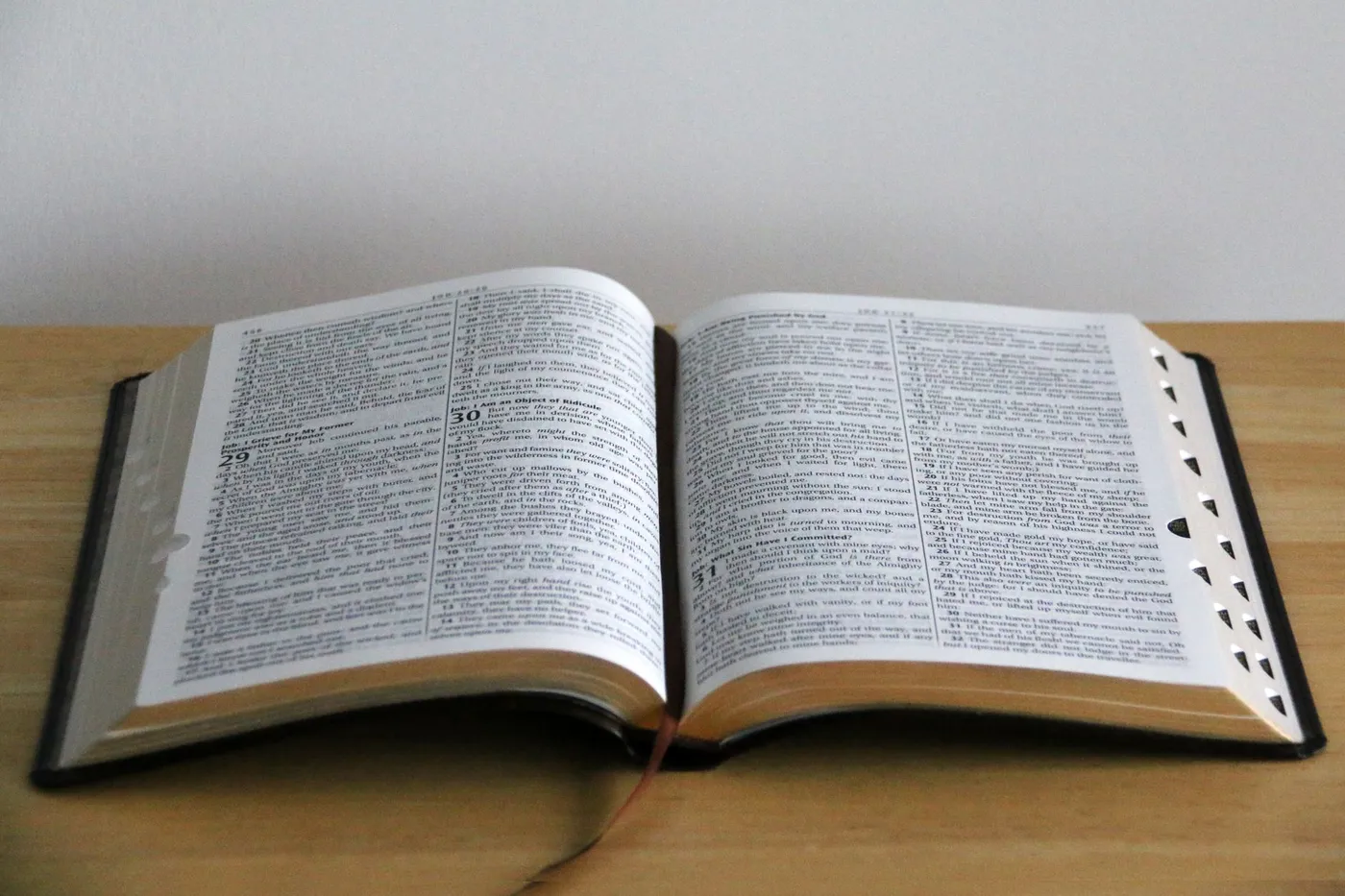
The Bible is not one book. It is a library of law, history, poetry, prophecy, letters and more, written over many centuries in Hebrew, Aramaic and Greek, for people whose daily life looked nothing like ours. Reading it straight through, the way you would read a novel, asks you to switch genres without warning.
That is why certain places stall almost everyone. Leviticus is detailed law for worship and daily life in ancient Israel. The genealogies are long lists of names. The prophets speak into political crises most readers cannot place. They matter; they were simply not written to be read cold.
The Bible admits this about itself. In Acts, Philip meets an Ethiopian official reading Isaiah in his chariot. “Do you understand what you are reading?” Philip asks. “How can I,” he said, “unless someone explains it to me?” (Acts 8:30–31, NIV). The official was educated and devout, and he still needed help. Needing it is not a failure. It is how the book has always been read.
So the fix for this kind of hard is context. That can be a study Bible, a pastor, a small group or a good commentary. It also helps to choose where you start: where to start reading the Bible covers an order that does not begin with the books that lose people. And because Christian traditions explain the same passage in different ways, it is worth knowing why commentary varies by tradition before you settle on one guide.
When your attention is hard: reading after a decade of screens
Some people understand every word and still cannot stay with it. They read a chapter and at the end nothing has landed. That is a different problem, and it is not about the text.
Gloria Mark, a professor of informatics at UC Irvine, has measured how long people keep their attention on one screen before switching. In an interview with the University of California, she explains that in 2003 it averaged about two and a half minutes. In recent years it has averaged about 47 seconds. Her research is about screens at work, not Bible reading. But most of us bring the same mind to both, and a chapter of Scripture asks for several minutes of unbroken attention.
The fix here is not trying harder. It is changing the room. Put the phone somewhere you cannot reach it. Read at the same time and in the same place each day, so the setting does some of the work. Read aloud if your eyes keep sliding. Start with a shorter passage and let your attention grow into longer ones.
When the habit is hard: no plan, no time, no grace
The third kind of hard is the most common. You meant to read. You did not decide what, or when, and then the day filled up.
Three things usually go wrong. There is no plan, so every morning starts with the question of what to read, and that question alone is enough to stop you. There is no fixed time, so reading competes with everything else and loses. And there is no grace: miss two days and the plan feels broken, so you stop and wait for next January.
The size of the task is also smaller than most people assume. The Protestant Bible is 724,811 words. Spread over 365 days, that is 1,986 words a day, or about nine minutes at an ordinary reading pace of 220 words a minute. The Catholic and Orthodox canons are longer, at about 10.3 and 10.9 minutes a day. We worked through the full arithmetic in how long it takes to read the Bible in a year.
And a missed day should not end anything. What ends most plans is not the miss but the rule that a miss means starting over. Our case against that rule is in why streaks make people quit, and what grace days do instead.
Most mornings stall before the reading starts, on the question of where to begin. BlessUp takes that question away: the day's portion is already waiting, starting with Genesis 1–3, about nine minutes on the Protestant plan. Reading it is also what opens the apps you have chosen to shield, so the phone stops competing with the page. Each study lesson carries four commentaries, Non-Denominational, Protestant, Catholic and Orthodox, and a missed day is covered by a grace day. See what day one looks like on the App Store
What the numbers say about people who finish
If you have never read the Bible all the way through, you are in the large majority. American Bible Society's State of the Bible 2026, a survey of 2,649 US adults, found that one-third said they had read all or most of it, and 17% said they had read it in its entirety. Only 10% said they had read none. The same report counts 28% of Americans in its “Movable Middle,” people who are curious about the Bible without yet engaging with it regularly.
Lifeway Research reports a similar picture from its own study: 9 in 10 Americans have read at least some of the Bible, but just 22% have finished it. Even among people who attend church more than once a week, about 3 in 5 (59%) say they have read it all. The two surveys ask differently and their figures differ, but they agree on the shape: most people start, and few finish.
The clearest pattern is the plan. In the ABS survey, 74% of people who use a Bible reading guide, schedule, plan or program said they had read most or all of it. That is a correlation, not proof: people who pick up a plan may already be more committed. But a plan answers the habit kind of hard directly.
Is it worth pushing through? Lifeway's Transformational Discipleship research among Protestant churchgoers found that reading and studying the Bible were the activities with the most impact on spiritual growth. Again, that is an association in one tradition's survey. For what it means in your own life, your pastor is a better guide than any survey.
Finding the Bible hard is not a verdict on you. It is usually the text, your attention and the habit, all at once, and each of them can be worked on. For more on reading well, see our spiritual discipline guides, and for questions about the app itself, the BlessUp FAQ.
Frequently asked questions
Why is the Bible so hard to understand?
Because it is an ancient library rather than a single book: law, history, poetry, prophecy and letters, written over centuries in Hebrew, Aramaic and Greek for cultures very different from ours. Many passages assume context a modern reader does not have. Even in Acts 8, an educated official reading Isaiah asked how he could understand it unless someone explained it to him. A study Bible, a commentary, a pastor or a small group supplies that context.
Is it normal to struggle to read the Bible?
Yes. American Bible Society's 2026 survey of US adults found that 17% had read the whole Bible, and a Lifeway study put it at 22%, so most people who start do not finish. Struggling usually comes from three ordinary things at once: a difficult text, an attention span trained by screens, and no settled plan or time for reading. Each of those can be worked on.
Which books of the Bible are hardest to read?
Readers most often stall in Leviticus, with its detailed laws for worship and daily life; in the genealogies, such as the long lists of names in 1 Chronicles; and in the prophets, which speak into historical crises most readers cannot place. They are hard because they assume a setting modern readers do not know, not because they matter less. Reading them with some background explanation helps a great deal.
What is the easiest way to read the whole Bible?
Use a plan and a fixed daily time. In American Bible Society's 2026 survey, 74% of people who used a reading plan, guide or schedule said they had read most or all of the Bible, though that is a correlation rather than proof. The daily amount is smaller than most people expect: the Protestant Bible is 724,811 words, about nine minutes a day at a normal reading pace for a year. Allow for missed days rather than restarting.
Does struggling to read the Bible mean I don't want God?
No. Finding the Bible hard is usually about the text, your attention and your habits, not the state of your heart. Many committed Christians describe the same struggle. Some writers do point to how much we value Scripture as part of the answer, and that is worth reflecting on, but difficulty on its own is not a verdict on your faith. If it weighs on you, talk it through with a pastor or someone you trust at church.
Genesis to Revelation, about nine minutes at a time. Start tomorrow morning.
No guilt. Ever. Grace is built in. Funded by readers, never by ads.