Bible Verses About Healing, Read in Context
By Dom · · 12 min read
Someone you love is ill, or you are, and a well-meaning message arrives with a verse in a serif font over a sunrise. It is a real verse. It is also doing something you did not ask it to do, which is to imply that the outcome is settled and the only variable left is you.
That is not what the Bible does with sickness. It is far stranger, far more honest, and considerably more use at two in the morning. So this is a list of the passages people search for, read with the sentences around them left in.
Key takeaways
- The most-quoted healing verses are mostly not medical promises. Jeremiah 30:17 is addressed to a nation returning from exile; Psalm 147:3 is about grief.
- Four New Testament passages show illness that is not healed - Paul’s thorn, Trophimus, Timothy’s stomach, and Epaphroditus. Staying sick is never treated as a failure of faith.
- James 5:14–15 is the one healing text with instructions, and they are corporate: call the elders and be prayed over. Not a private technique.
- Catholic and Orthodox teaching both decline to promise a cure, describing strengthening, peace and courage, and healing “if it is the will of God.”
- Randomized trials cannot settle whether prayer heals, per a 2009 review in the Indian Journal of Psychiatry - for scientific and theological reasons both.
The verses people reach for first
There are six or seven passages that carry almost all the weight in this search, and they are worth reading with their surroundings rather than as slogans. What follows is what each one actually says, and — just as importantly — what it is not promising.
| Passage | What it says | What it is not saying |
|---|---|---|
| Psalm 103:2–3 | God “forgives all your sins and heals all your diseases” — a psalm of praise recounting God’s character | A schedule. It is worship, not a timetable for a particular illness |
| Psalm 147:3 | “He heals the brokenhearted and binds up their wounds” | Primarily about physical illness — the wounds in view are grief and exile |
| Isaiah 53:5 | “by his wounds we are healed,” in a passage about a suffering servant bearing sin | A guarantee of bodily cure now; traditions differ on how much is present and how much is promised |
| Jeremiah 30:17 | “I will restore you to health” — spoken to the nation of Israel about return from exile | A personal medical promise; the “you” is a people, not a patient |
| James 5:14–15 | Instructions: call the elders, be anointed with oil, be prayed over | A private technique. It is explicitly something the church does with you |
| Matthew 4:23 | Jesus healing “every disease and sickness” in Galilee | A description of what happens in every generation since |
None of that makes the verses smaller. It makes them usable. A promise you have to keep re-explaining to yourself at three in the morning is not much comfort; one that says what it means is.
Most of the Bible’s healing language is in the Psalms, where nothing is fixed yet
If you only ever meet these texts through a list, you would think Scripture speaks about illness mainly in the voice of resolution. It does not. It speaks mostly in the voice of someone still waiting.
Psalm 6 is a sick person asking how long. Psalm 13 asks the same question four times in two verses. Psalm 88 ends without relief at all — it is the one psalm that finishes in the dark, and the Church kept it in the book anyway.
That is worth knowing when you are ill and the verses you have been sent all sound triumphant. The Bible has language for the part you are actually in. It was written by people who were in it.
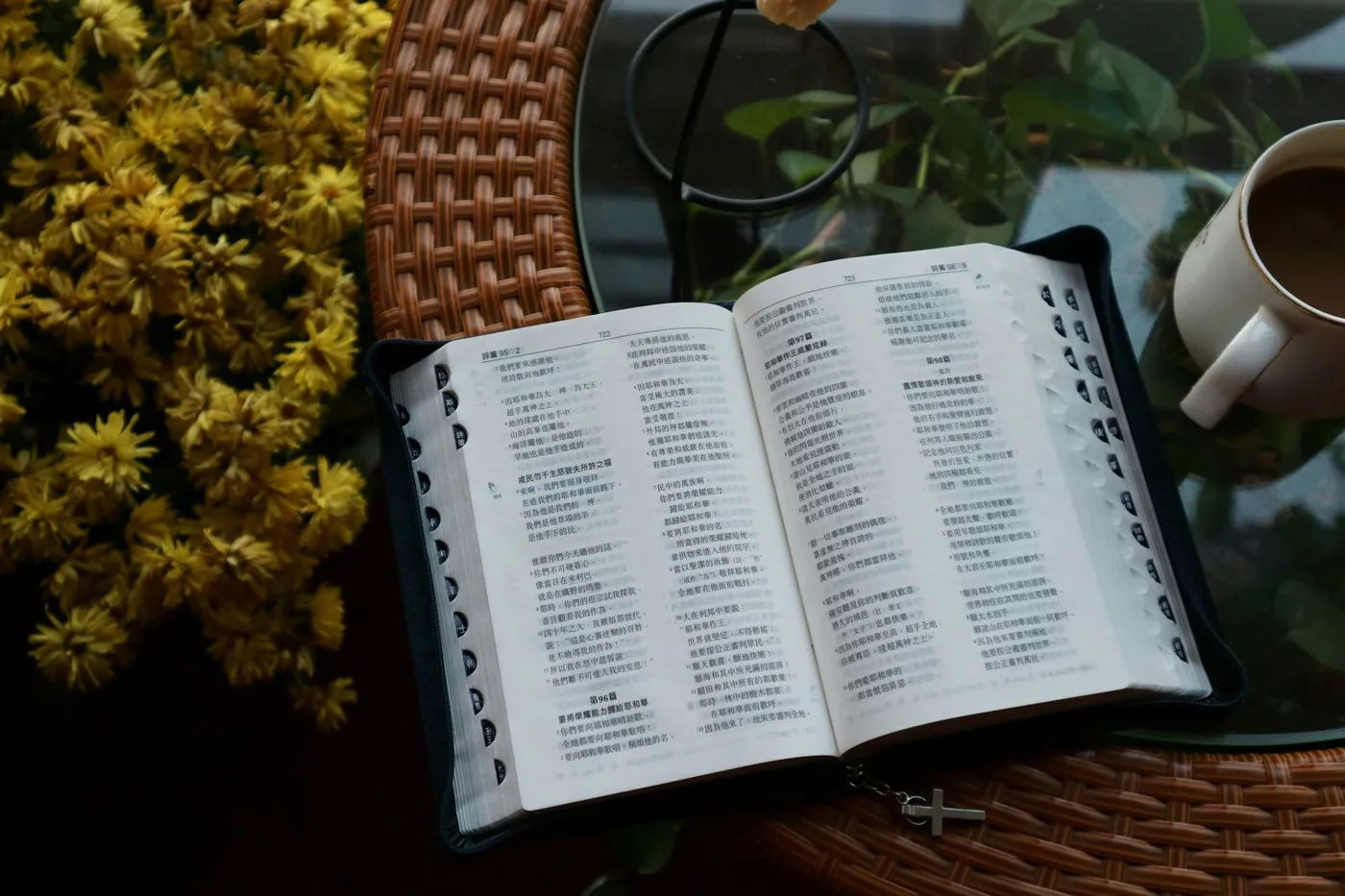
Four passages the verse lists leave out
This is the omission that matters most, because leaving it out is what turns a comfort into a burden. In the New Testament, people close to the apostles get sick and stay sick.
- 2 Corinthians 12:7–9 — Paul asks three times for his “thorn in the flesh” to be removed. It is not. The answer he gets is “My grace is sufficient for you, for my power is made perfect in weakness.”
- 2 Timothy 4:20 — one line, easy to miss: “I left Trophimus sick in Miletus.” Paul, who elsewhere heals people, travels on without healing his companion.
- 1 Timothy 5:23 — Timothy has a recurring stomach problem, and the advice he is given is practical and medical rather than miraculous.
- Philippians 2:25–27 — Epaphroditus is ill nearly to the point of death, and Paul describes his recovery as mercy, plainly relieved, not as a foregone conclusion.
Whatever your tradition concludes from those passages — and traditions do conclude different things — their presence in the text does one useful thing immediately. It means that being sick and staying sick is not, by itself, evidence that you have prayed wrong or believed too little. The New Testament will not let anyone tell you that.
What “by His wounds we are healed” is doing
Isaiah 53:5 is the verse most often placed on its own over a photograph, and it is the one that most rewards being read in full. The chapter is about a servant who suffers on behalf of others; the healing named in it sits alongside transgressions, iniquities and peace. The New Testament picks the line up in 1 Peter 2:24 and applies it there to sin.
Christians have read the relationship between that healing and bodily healing in genuinely different ways for a very long time, and this is a question for your own pastor or priest rather than for a blog run by app builders. The same is true of a lot of Scripture, which is why one passage can carry four honest commentaries. What is not in dispute is that the verse is about something costly, done by someone else, on your behalf.
How churches actually pray for the sick
James 5 is the one healing passage that comes with instructions, and nearly every tradition has built a practice on it.
The Catholic Church treats it as a sacrament. Its Catechism describes the effect of the Anointing of the Sick as a particular gift of the Holy Spirit bringing strengthening, peace and courage — not as a guaranteed cure.
The Orthodox Church celebrates Holy Unction and is equally direct. The Orthodox Church in America, citing James 5 explicitly, teaches that healing may come if it is the will of God, while stating plainly that it is not always God’s will that there should be physical healing, and that the sacrament is emphatically not the “last rites.”
Anglican, Lutheran, Methodist and many Protestant churches keep an order for ministry to the sick with prayer and, often, anointing; other congregations practise laying on of hands and prayer without the formal rite. The common thread is the part the verse lists tend to drop: James does not tell a sick person to find the right words alone. He tells them to call someone. If you are ill and not currently connected to a congregation, that is a real obstacle, and the BlessUp church finder lists churches by city.
What the research can and cannot tell you
People ask whether prayer works, and it is worth being careful here, because this is where a lot of Christian writing quietly overstates.
On whether prayer produces measurable cures, the honest answer is that the study design cannot settle it. In a review in the Indian Journal of Psychiatry in 2009, Chittaranjan Andrade and Rajiv Radhakrishnan argued that randomized controlled trials cannot be applied to the efficacy of prayer in healing, for reasons both scientific and theological: the variables that would matter cannot be measured, and the design assumes a God who responds predictably to experimental conditions. Their conclusion is that the research has led nowhere.
What has been studied more usefully is how faith functions for people who are seriously ill. In a 2006 study of 170 patients with advanced cancer published in the Journal of Palliative Medicine, Tarakeshwar and colleagues found that positive religious coping was associated with better overall quality of life, particularly on existential and support measures, while negative religious coping — feeling punished or abandoned by God — tracked with worse quality of life. It measured quality of life, not survival, and association is not causation. But the direction is worth noticing: how you hold the faith seems to matter more than how hard you hold it.
If you are the one who is sick
Practical things, offered without any suggestion that you are doing this wrong.
- Pick one passage, not forty. A list of fifty verses is a research project. One psalm you return to is a companion. Psalm 23 and Psalm 121 have carried an enormous number of people through hospital stays for a reason.
- Let the lament psalms count as prayer. They are in the book. Asking how long is not a lapse.
- Make the ask concrete. James 5 has people call the elders. Name someone and ask them to pray with you, out loud, in the room.
- Keep it very small on bad days. Three verses is a real reading. On the worst days, someone reading to you counts.
And if the trouble is not doubt but exhaustion — if you want to read and cannot concentrate — that is a different problem with a gentler answer. Praying when you do not feel it covers the dry stretches, and why a missed day does not have to set you back covers the rest.
Illness makes the deciding part impossible long before it touches the reading part. You still want to be in Scripture; you do not have it in you to work out where. Having the day’s passage already chosen removes exactly that step: it is waiting when you open your phone, it is short, and a missed day is covered rather than counted against you. Connection grows the way anything grows, a little at a time. BlessUp is on the App Store.
If you are praying for someone else
Two things people who have been seriously ill say repeatedly about this.
The first is that a verse sent without a sentence around it often lands as pressure rather than comfort — particularly the triumphant ones, and particularly early. “I read Psalm 121 this morning and thought of you” does something that a bare graphic does not.
The second is that the offer to pray is worth more when it is specific and now. Praying with someone, in the room or on the phone, in thirty seconds, is a different act from promising to pray later. James 5 assumes presence.
If you are unsure where to begin reading yourself, a short guide to where to start will save you the search, and the anxiety passages are handled the same honest way in twelve verses about anxiety, read in context.
Frequently asked questions
What is the best Bible verse for healing?
Psalm 147:3 — “He heals the brokenhearted and binds up their wounds” — is the one most people find carries them, because it does not overpromise. If you are looking for a passage to return to daily rather than a single line, Psalm 23 and Psalm 121 have accompanied more sick people than any verse graphic.
Does the Bible promise God will heal everyone?
No, and it shows the opposite in several places. Paul asks three times for his thorn in the flesh to be removed and it is not; he leaves Trophimus sick in Miletus; Timothy has a recurring stomach complaint; Epaphroditus nearly dies of illness. Christians differ on how to read these, but the passages rule out treating continued sickness as proof of weak faith.
What does "by his wounds we are healed" mean?
Isaiah 53:5 sits in a chapter about a servant who suffers on behalf of others, alongside language about transgressions, iniquities and peace. The New Testament picks the line up in 1 Peter 2:24 and applies it to sin. How that healing relates to bodily healing is read differently across traditions, and is a question for your own pastor or priest.
What does James 5:14-15 say about anointing the sick?
It tells anyone who is sick to call the elders of the church, who pray over them and anoint them with oil in the name of the Lord. Catholics receive this as the sacrament of the Anointing of the Sick and Orthodox Christians as Holy Unction; many Protestant churches keep an order for ministry to the sick. The instruction is corporate rather than private: it assumes someone comes to you.
Does research show that prayer heals illness?
A 2009 review in the Indian Journal of Psychiatry argued that randomized controlled trials cannot answer that question at all, on both scientific and theological grounds. What research does show is narrower: in a 2006 study of 170 advanced cancer patients, positive religious coping was associated with better quality of life, while feeling punished or abandoned by God tracked with worse. That is association, not causation, and it concerns quality of life rather than cure.
Read a chapter. Your apps open. BlessUp is free to download on the App Store.
No guilt. Ever. Grace is built in. Funded by readers, never by ads.